AAfter weeks of dealing with leaking walls, car repairs, and dental treatments, I am desperate for a break. Anything to escape the daily chores and household emergencies. So, I enthusiastically accept the weekend invitation from Sariska Lodge and we set off at dawn from Delhi towards Alwar, Rajasthan. Beyond the chaos of Gurugram’s traffic jams, we drive along the Delhi-Mumbai expressway before taking a small road that winds through villages and fields filled with bajra, ascending into the forested Aravalli hills. The noise of city life fades away. Here, there is a slower pace, peace, and space to breathe.
Just like me, the countryside is on a break. As we walk along the road, we see pilgrims heading to the mela at the Baba Bhartrihari temple deep in the forest. We pass groups of women wearing red and yellow odhnis over their heads and carrying strong backpacks. The driver mentions that during this quiet period in farming work, villagers take time to visit the temple of the king who became an ascetic. The journey is challenging, but kind-hearted villagers along the way set up community kitchens to feed the pilgrims. Indeed, we soon reach a roadside area where men with turbans are stirring a large pot of aloo sabzi and frying pooris in a big karhai. Everyone, including us passing by, is warmly invited to eat. So, we continue, enjoying kachori, jalebi, and moong vade, surprised and happy about this unexpected delight.
We continue to enjoy ourselves, when the car drops us off at Sariska Lodge, located near the entrance of the Sariska Tiger Reserve in Tehla. The noise of DJs playing bhajans disappears as the gate closes. In its place, peafowl call out to one another and water splashes from a fountain. A horse softly whinnies behind a bamboo screen. We step onto a pavilion shaded by trees with shiny flagstones. A staff member dressed in white approaches with refreshing scented towels and glasses of tangy lemonade. Welcome to a land of luxury resorts.
After visiting the website, we have an idea of what to anticipate: spacious rooms and private pools to relax in; personal butlers and spa treatments to indulge in; “curated” meals and “experiences” designed to make each moment perfect for social media and unforgettable. All at a significant cost. However, even someone with a skeptical taste can’t help but feel rejuvenated by the Lodge’s lush greenery, its energetic staff, and the genuine effort that has been put into its creation.
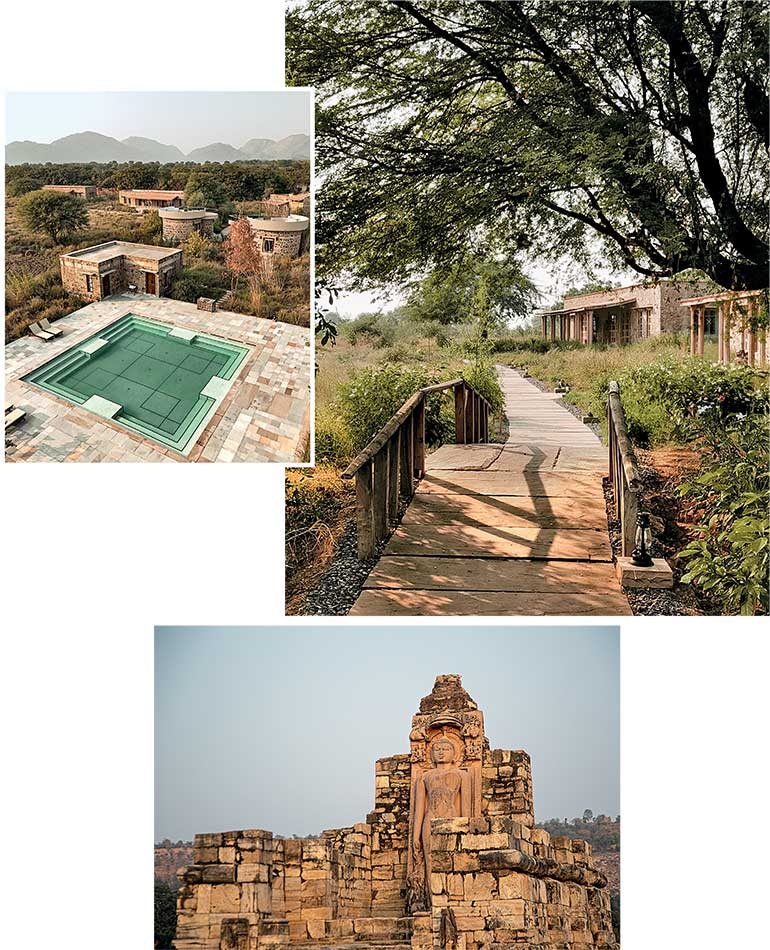
Anand and Rie Shekhawat established Sariska Lodge after many years of working with Aman Resorts, eventually opening their own establishment. Anand’s father was a forest officer, and he spent his childhood in various wild areas across Rajasthan. Living outside Sariska allowed him to combine his passion for the jungle with his career in hospitality. Eleven stone-built suites are spread throughout thick clusters of grasses, trees, and flowering bushes. Winding paths lead to the dining area, spa, pool, and stables. The rooms offer a cool escape from the humid monsoon weather, with their elegance balanced by playful tiger and leopard designs on the window coverings, lamps, cushions, and artwork.
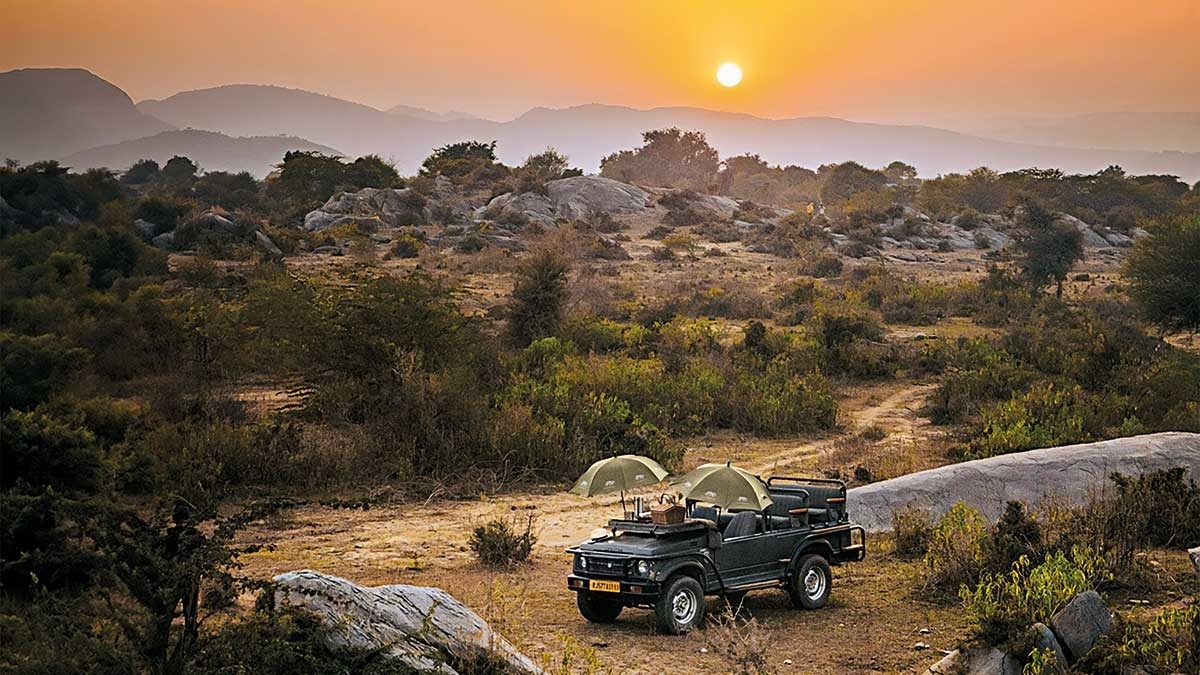
Big cats are, without a doubt, the main attraction that draws visitors to Sariska. However, even though the Tiger Reserve is closed during the rainy season, I soon find out there’s much to explore and enjoy in the nearby area. We head out in the late afternoon to Mangalsar lake, passing beneath the charming Tehla fort situated on a hilltop above. A group of camels is grazing among the babul trees, with bells around their necks making a quiet, random jingling sound. I can’t stop myself from expressing excitement every time I see flame lilies; their vibrant red and gold flowers appear very exotic in this natural setting. It’s nearly dark when we arrive at the lake. Waves gently hit the shore as cattle egrets fly past the green hills toward their resting places. We get out of the jeep to discover that the Lodge staff has prepared masala chai and warm pakore for us, created right in the middle of the wilderness. Enjoying the contrast between the crispy paneer pakore and the spicy coriander chutney, feeling the moist breeze from the lake, and seeing the cloudy sky full of rain: all these elements combine to create the delightful essence of the monsoon season.
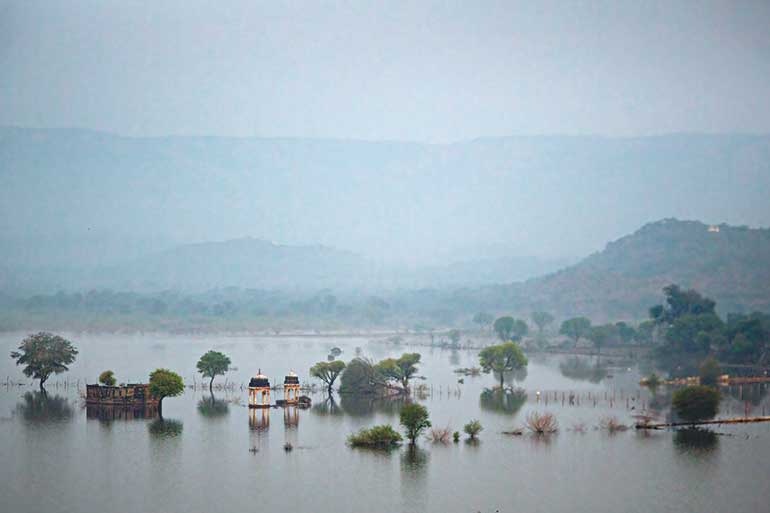
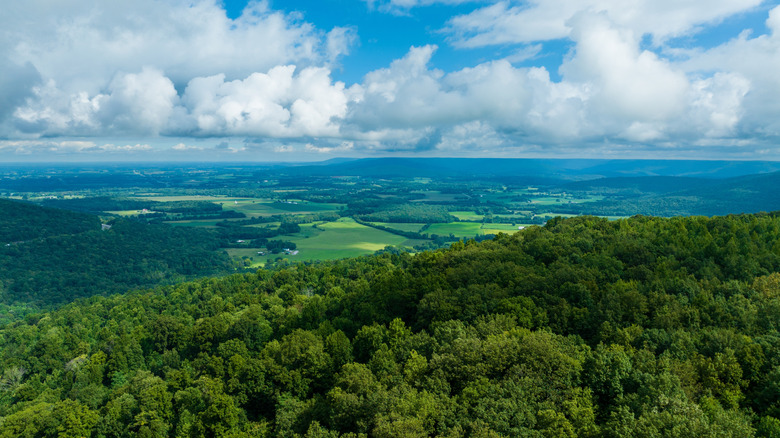
In the semi-arid region of Rajasthan, there is a unique happiness brought by the rains. On the following morning, as we began our journey, the entire landscape appeared to be joyful. In the fields, tall and proud bajra plants are surrounded by walls made of rough stone. Wild gourd vines spread uncontrollably over thorny fences. Buffaloes relax in muddy ponds. In the courtyard of a village house, a mother is washing her young son, scrubbing him thoroughly for school. Our jeep departs the valley and heads towards a road that winds into the surrounding hills. As it ascends through the forest, I find myself in a paradise for naturalists. The dhau trees have sprouted sage-silver new leaves, each one shaking with small droplets of water. Khair, ronjh, kullu, salai—each tree is covered in fresh greenery, spreading out to welcome the rain.
Gliding through this greenery, we enter another valley, beautifully isolated, where the rural scenery unveils a hidden gem. Spread across the bajra fields are remnants of 10th-century temples, with elaborately carved bases and columns rising toward the sky. In the midst of peaceful countryside, the area is full of life. Brave men and women fight vyala, mystical creatures with lion heads and horse bodies. Kirtimukha statues ward off negativity. Door frames that now lead to nothing are filled with apsaras performing songs and dances around gods. Each god embodies many aspects: Surya, Vishnu, Shiva, and Brahma, each with their unique symbols, all merged into one figure. There’s a Devi temple. All are deserted except the nearly intact Neelkanth Mahadev, featuring a shikhara made of weathered sandstone, and a stepwell nearby. Peacocks move among wildflowers and grasses that grow among the ruins. An eight-meter-tall statue of the Jain Tirthankar Shantinath stands alone, watching over this once-glorious place.
It is all very remarkable. My mind is filled with speculation, but the Archaeological Survey of India, which safeguards the temples, has neglected to offer any details for visitors. Later, I learn from an art history friend that these temples were constructed over a thousand years ago when this area was part of Paranagar, a principality under the Pratihara dynasty. Within a century or so, the community that worshipped and took care of them disappeared. We may never find out why. As we drink tea and eat biscuits on worn steps overlooking an old pond, I am reminded of how much more there is to admire if one looks beyond tigers at the natural and cultural environment they are part of. If it hadn’t been for the closed Tiger Reserve, I might have never come across this hidden gem.
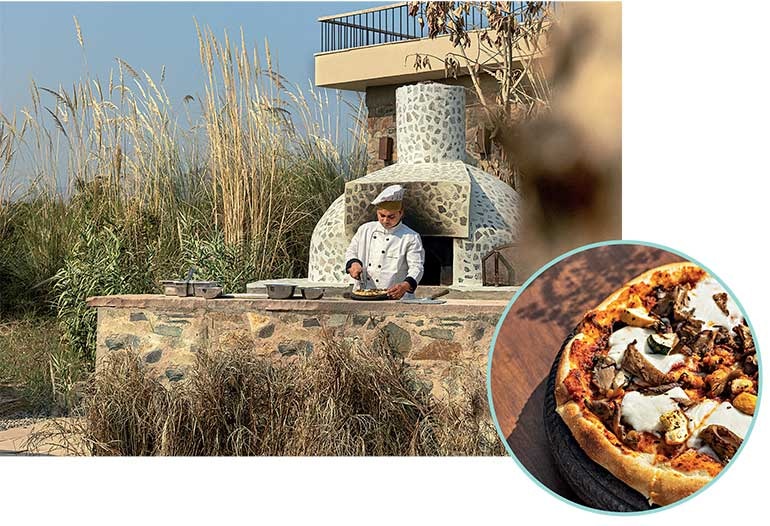
Brunch at the Lodge features fruit, homemade bread, light omelettes, and quality coffee. The menu is varied. The gazpacho and Caprese salad are highlighted by the taste of freshly harvested tomatoes. For dinner, the Rajasthani offerings include garlic-fried chaulai, a type of seasonal vegetable. The service is attentive, sometimes overly so, but the younger staff will likely realize that not all guests desire constant assistance. Or that not everyone expects a towel used for drying hands to be immediately replaced. Their intentions are good, but this approach conflicts with the Lodge’s goal of promoting an environmentally friendly atmosphere.
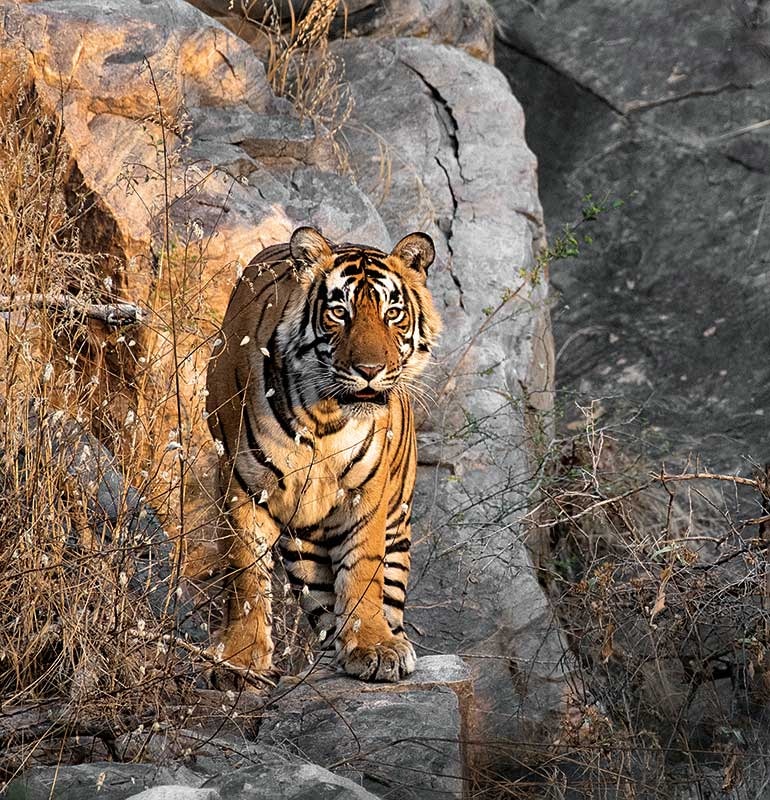
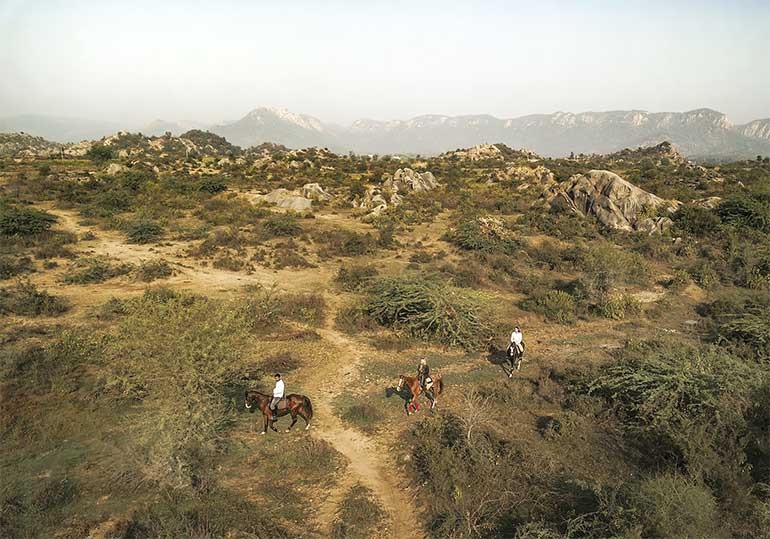
Following a relaxing massage, one of the Tibetan healing treatments available at the spa, I fall asleep on the big swing near my pool, thinking about how happy my four-year-old nieces would be splashing in the water, chasing dragonflies and big frogs. Or riding a horse, slowly trotting around the field. There are many activities to enjoy at the Sariska Lodge. Even if the only large cat you spot is stitched into your window curtain.