A New Approach to Carbon Removal in Brazil
In the southern region of Brazil, researchers at a carbon removal company are working to speed up a natural process that typically takes thousands or millions of years. The company, Terradot, is spreading tons of volcanic rock crushed into fine dust over farmland where soybeans, sugar cane, and other crops are grown. As rainwater moves through the soil, chemical reactions pull carbon from the air and convert it into bicarbonate ions that eventually flow into the ocean, where the carbon is stored.
This method, known as “enhanced rock weathering,” is gaining attention as a potential solution for large-scale carbon sequestration. Some scientists believe it could remove billions of tons of carbon, helping to slow global climate change. Similar projects are being developed around the world, with funding exceeding a quarter of a billion dollars.
As governments struggle to meet their emissions reduction targets, there is growing agreement that large-scale carbon removal will be necessary to prevent the worst effects of climate change. An international study estimated that the world may need to remove up to 10 gigatons of carbon dioxide annually by 2050 to limit warming to 1.5 degrees Celsius—more than the annual emissions of the United States.
Shawn Benner, a hydrogeologist and geochemist who left Boise State University after more than two decades to join Terradot, said he made the decision based on what his grandchildren would want him to do. “Not many people have the chance to change the temperature of the planet,” he said.
Despite its promise, enhanced rock weathering faces significant challenges. One key issue is whether companies like Terradot can accurately measure how much carbon they remove. Scaling the process globally also presents major logistical hurdles.
“It’s at an exciting stage,” said David Beerling, director of the University of Sheffield’s Leverhulme Centre for Climate Change Mitigation. “But there’s a need for caution in ensuring that we have rigorous, cost-effective tracking and verification so that people don’t make unsubstantiated claims for carbon credits.”
From Geologic to Human Timescales
Terradot was founded in 2022 at Stanford, emerging from an independent study between James Kanoff, an undergraduate seeking large-scale carbon removal solutions, and Scott Fendorf, an Earth science professor. The company ran a pilot project across 250 hectares in Mexico and began operations in Brazil in late 2023.
Since then, Terradot has spread about 100,000 tons of rock over 4,500 hectares. It has signed contracts to remove about 300,000 tons of carbon dioxide and is backed by prominent Silicon Valley investors. The company expects to deliver its first carbon removal credit—representing one metric ton of verified carbon dioxide removed—by the end of this year and then scale up from there.
Rock weathering is well-studied by scientists. The process acts like a global thermostat. When temperatures rise, weathering speeds up, pulling carbon dioxide from the atmosphere and helping cool the planet.
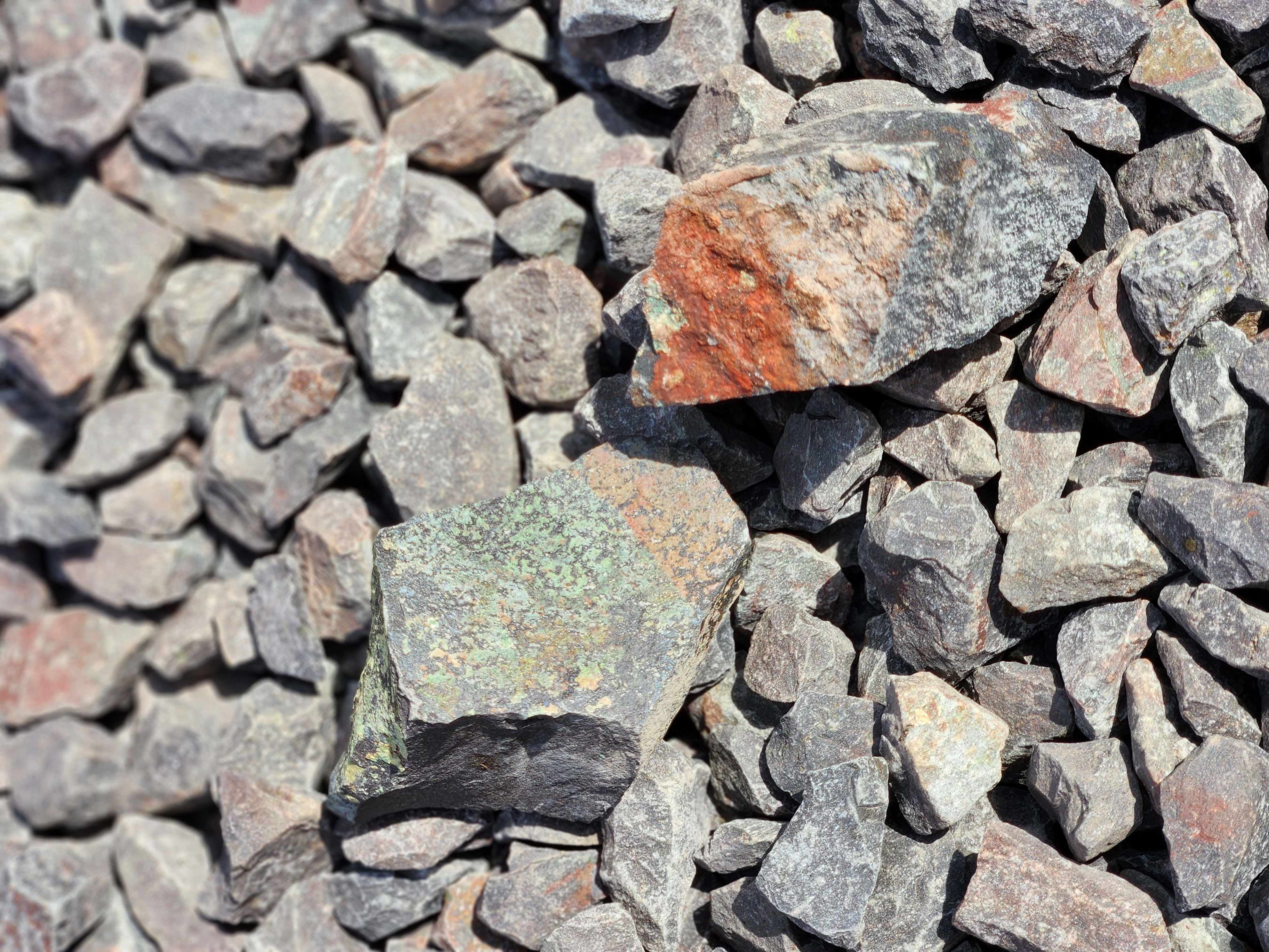
Terradot is working to accelerate this process, bringing it from a geological timescale to a human one. It does this by taking basalt, a rock that weathers easily, and grinding it to the texture of baby powder to increase its surface area. The rock is then placed in regions with hot, humid climates for rapid weathering.
Brazil offers additional benefits: widespread agriculture and plenty of quarries.
Brazil’s Cerrado and the Role of Basalt
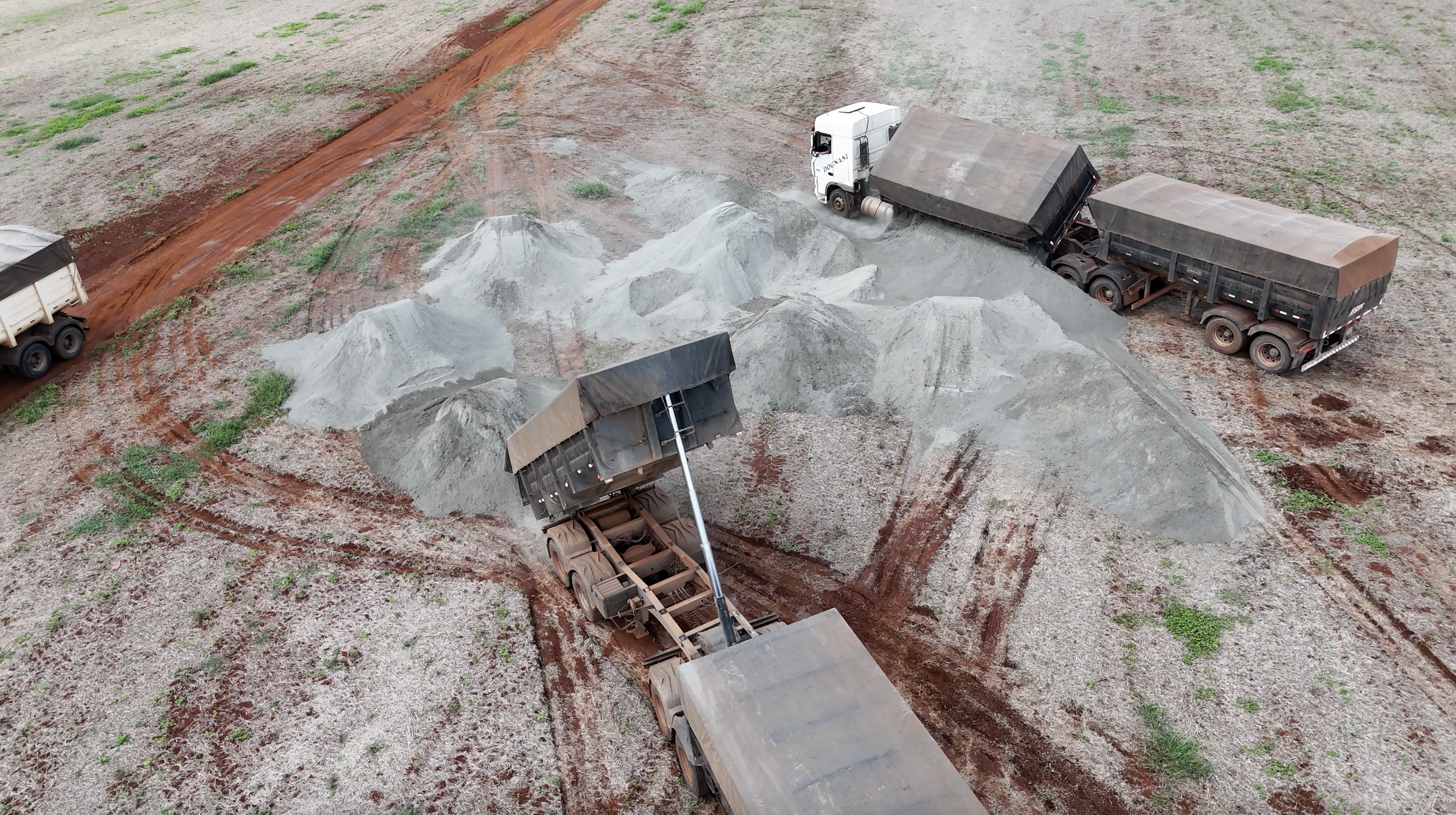
The Cerrado, a savanna region in Brazil, has naturally acidic soil. In the 1960s, agronomists discovered that adding lime to the soil could reduce its acidity, making the land suitable for crops. This innovation helped Brazil become a net food exporter rather than importer.
Terradot partners with farmers to replace lime with basalt, which also balances soil acidity and has the added benefit of boosting crop yields in some areas. The company covers the cost of shipping and spreading the rock.
Brazil is also home to hundreds of quarries, many located near farmland. Basalt is abundant and widely used for construction. The process of grinding and crushing the rock for these projects produces small fragments that are difficult to sell. Terradot buys them.
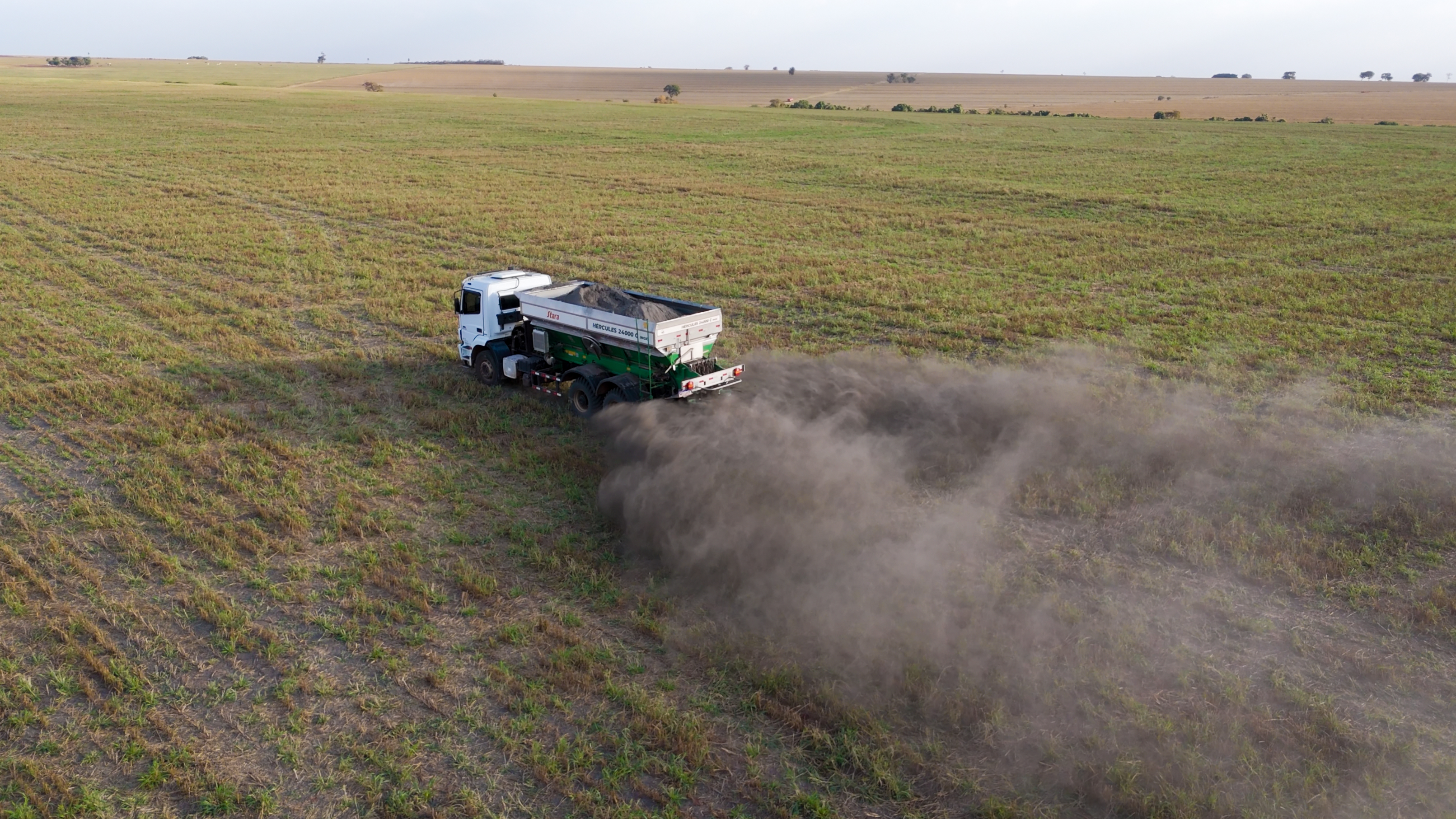
In late August, a spreader truck emblazoned with a Brazilian flag rumbled across the fields of a farm in São Paulo state. Dark plumes of basalt shot from its rear and settled over the red earth. Though the truck was spreading 25 tons of rock per hectare, on the ground it looked like a dusting of gray. Farm fields stretched as far as the eye could see.
Carlos Vecchi, the owner, pulled out his phone and tapped in the numbers. He estimated that working with Terradot will save him about $700,000 each year that he would have instead applied lime.
But he said he’s not doing it for the money. The past two years have brought bad weather, and he remembers a time when it didn’t rain for 100 days. Was climate change to blame?
“It’s a question that we ask almost every day,” Vecchi said in Portuguese. By working with Terradot, he said, he hopes to be a “vanguard” of the future.
The Importance of Data
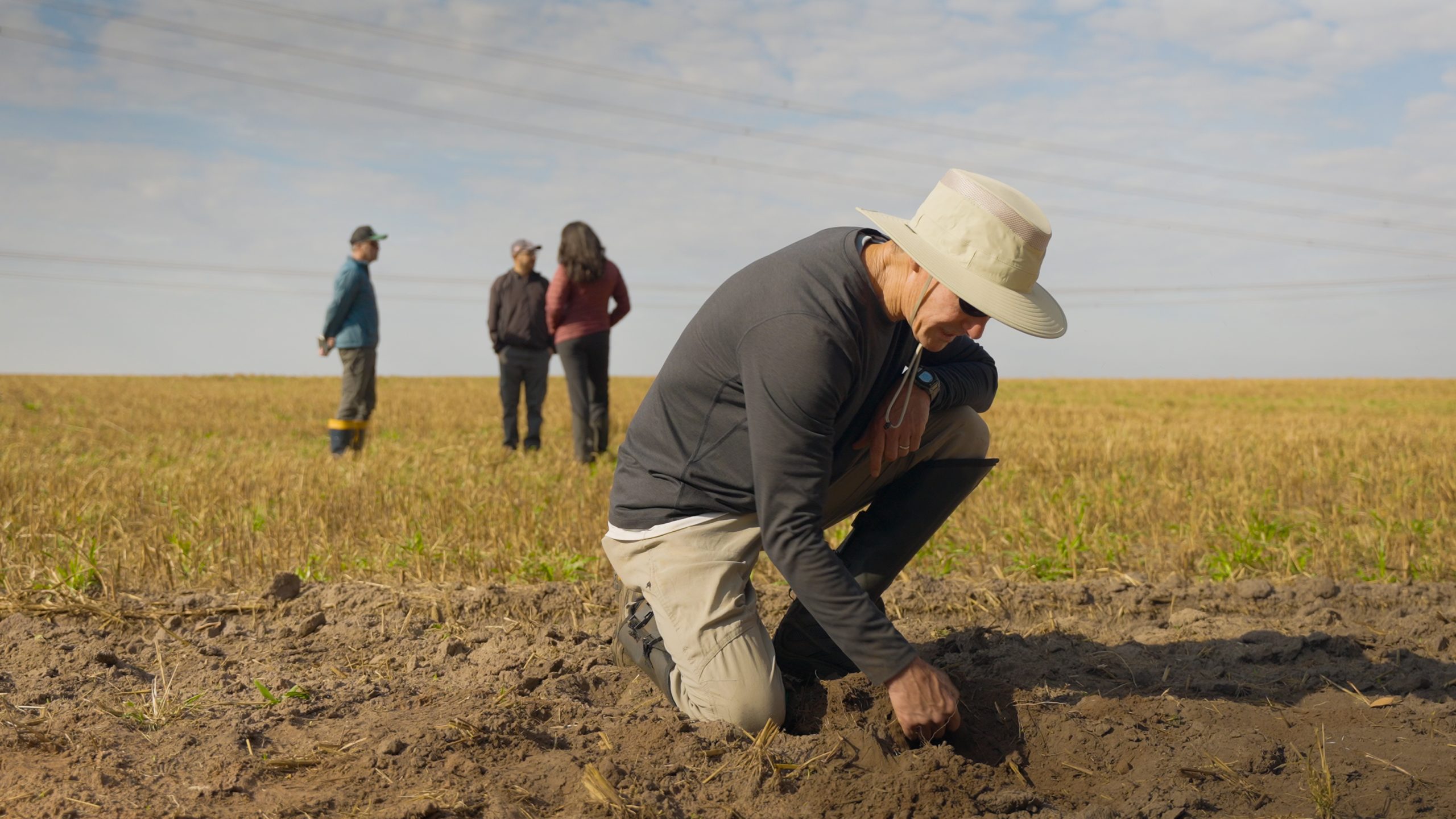
Elsewhere on Vecchi’s farm, a team of scientists tramped through dense fields of millet, golden and ready for harvest. They clipped seed heads at random points across experimental plots testing different soil treatments and farming methods. The samples would be analyzed in a lab to see if the basalt boosted the yield and nutrient content of the grain.
They returned to the dirt road, where Carolina Trentin, an agronomist, tried to weigh a bag of millet on a hanging scale. A gust of wind tilted the bag, and the group agreed it would be more accurate to weigh the grain at the lab.
“Good data or no data,” said Jenny Mills, a geochemist with two notebooks tucked into the front of her overalls.
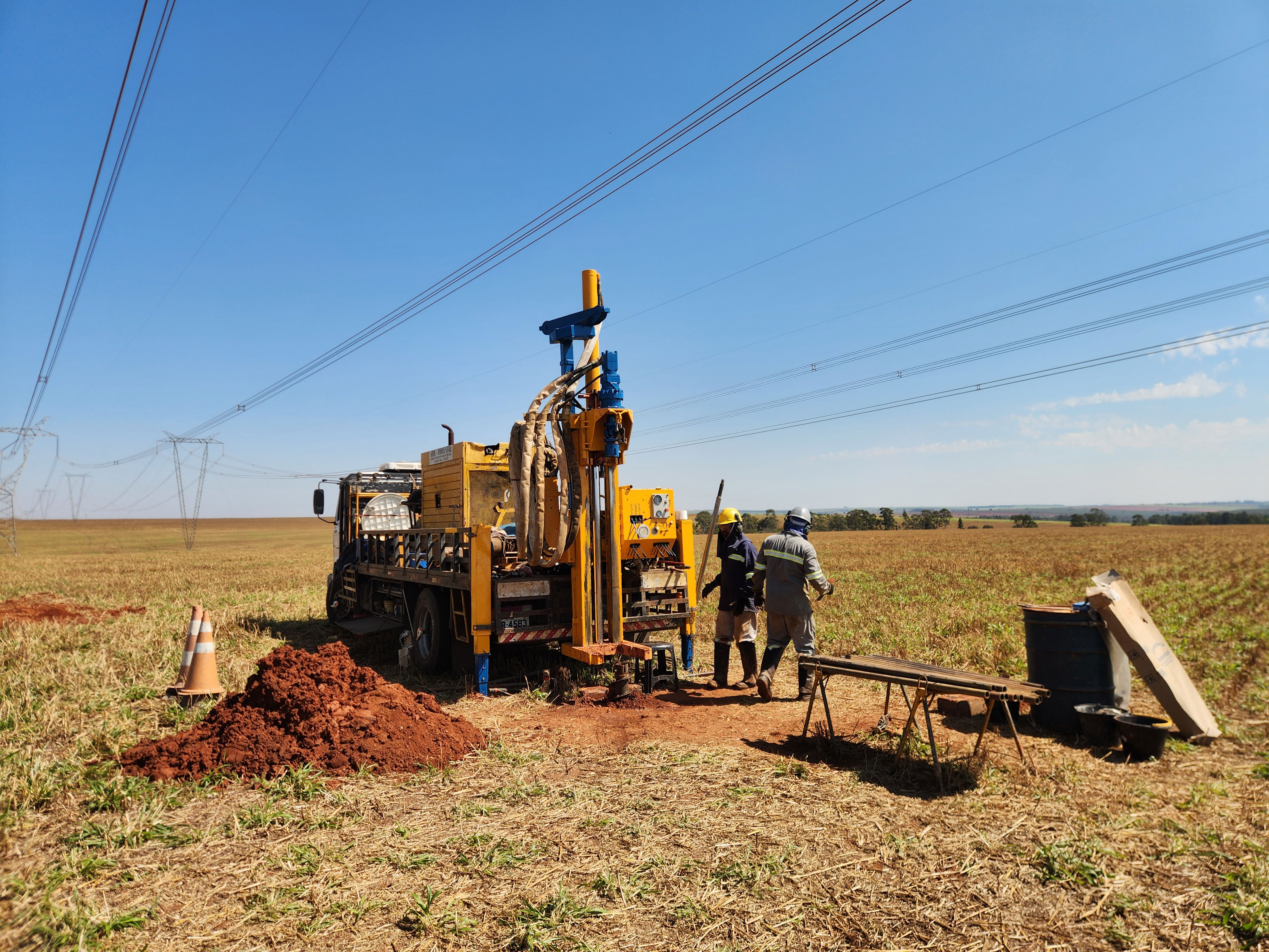
Thousands of measurements are taken across the farm to quantify the effects of the basalt application, including analysis of deep sediment cores and monitoring the water chemistry of the watershed the farm drains into. The main focus is understanding how carbon moves through the land and water.
“Right now, to give people the highest confidence, we’re spending nearly half the cost on measuring the removal,” said Kanoff, the co-founder. “You want to basically measure everything under the sun.”
But the goal is to reduce these costs by identifying the most important measurements. Eventually, Terradot aims to develop a predictive model that can estimate how much carbon a given field can capture.
Skepticism and the Need for Validation
The claims made by enhanced rock weathering start-ups have drawn some skepticism from researchers who say they want to see data and peer-reviewed research supporting them. Terradot said it will publish its data as part of the carbon-crediting process after the credits are delivered.
Benjamin Houlton, the dean of Cornell’s College of Agriculture and Life Sciences, said, “I’ve yet to see a study that can adequately scale measurement to anything greater than an acre with a great degree of confidence.”
He cautioned against moving too quickly and cited what happened with credits issued for preserving or restoring forests as a cautionary tale. Studies found that many of these credits were tied to projects that failed to provide real or lasting benefits, including by protecting land that was unlikely to be cleared and claiming credits for forests that were still destroyed.
Others were more positive. Noah Planavsky, a Yale professor who has studied enhanced rock weathering, said companies like Terradot are operating at a scale beyond what is possible in academic trials. That scale, he said, could allow for more robust estimates of carbon removal.
“The basic idea that you can remove carbon from this process is incontrovertible,” he said. “We will know as these datasets start emerging of how certain we can be about the extent of carbon removed.”
Fendorf, the Stanford professor, said the instinct for scientific caution is understandable, but the urgency of climate change requires a different mindset, one that he’s needed to adopt after several decades in academia.
“We are trained to be so critical as academics, but right now, we need speed and scale,” he said. “We need to think about how we take our solutions to the world and how we do that fast.”
After a day working on the farm, the Terradot team, many wearing pants streaked with red dirt, gathered around a table for a barbecue. One slowly roasted large skewers of meat over an open fire, carving thick slices that people picked up by hand.
Connor Sendel, the head of operations, stood up and announced that the company’s first project had its design validated by a carbon removal registry—moving them a step closer to delivering their first carbon credit. The room erupted in cheers.