The Rise of Active-Learning Lesson Plans in STEM Education
A recent study conducted by researchers at Cornell University has revealed a significant increase in the number of active-learning lesson plans shared among university professors, particularly in STEM (Science, Technology, Engineering, and Mathematics) disciplines. This shift reflects a growing commitment to improving learning outcomes and adapting to modern educational needs.
The study, titled “A Scoping Review of Published Lesson Plans Showcases Two Decades of Change in Undergraduate Life Science Education Resources,” was published on September 16 in the journal CBE—Life Sciences Education. The research was led by Kira A. Treibergs, a former Cornell postdoctoral researcher now serving as a professor of the practice at Wheaton College. The paper analyzes the evolution of lesson plans related to active learning from 2000 to 2022.
Michelle Smith, Distinguished Professor of Arts & Sciences and senior associate dean for undergraduate education at the College of Arts and Sciences, emphasized the broader impact of these lesson plans. “These resources go beyond classroom activities—they include worksheets, assessments, and ideas for group work,” she said. “Sharing them not only helps students learn but also supports other educators and researchers studying changes in teaching methods.”
The Influence of the “Vision and Change” Report
In 2011, the “Vision and Change” report, spearheaded by groups including the American Association for the Advancement of Science (AAAS), called for a major transformation in how biology is taught at the undergraduate level. In response, the biology education research community launched Course Source in 2014—a new journal dedicated to publishing open educational resources (OERs) that include lesson plans across various STEM fields.
“This was the first journal to bring together lesson plans from multiple subfields of biology in one place,” Smith explained. Many of the articles analyzed in this study were published in Course Source, highlighting its role in promoting accessible and adaptable teaching materials.
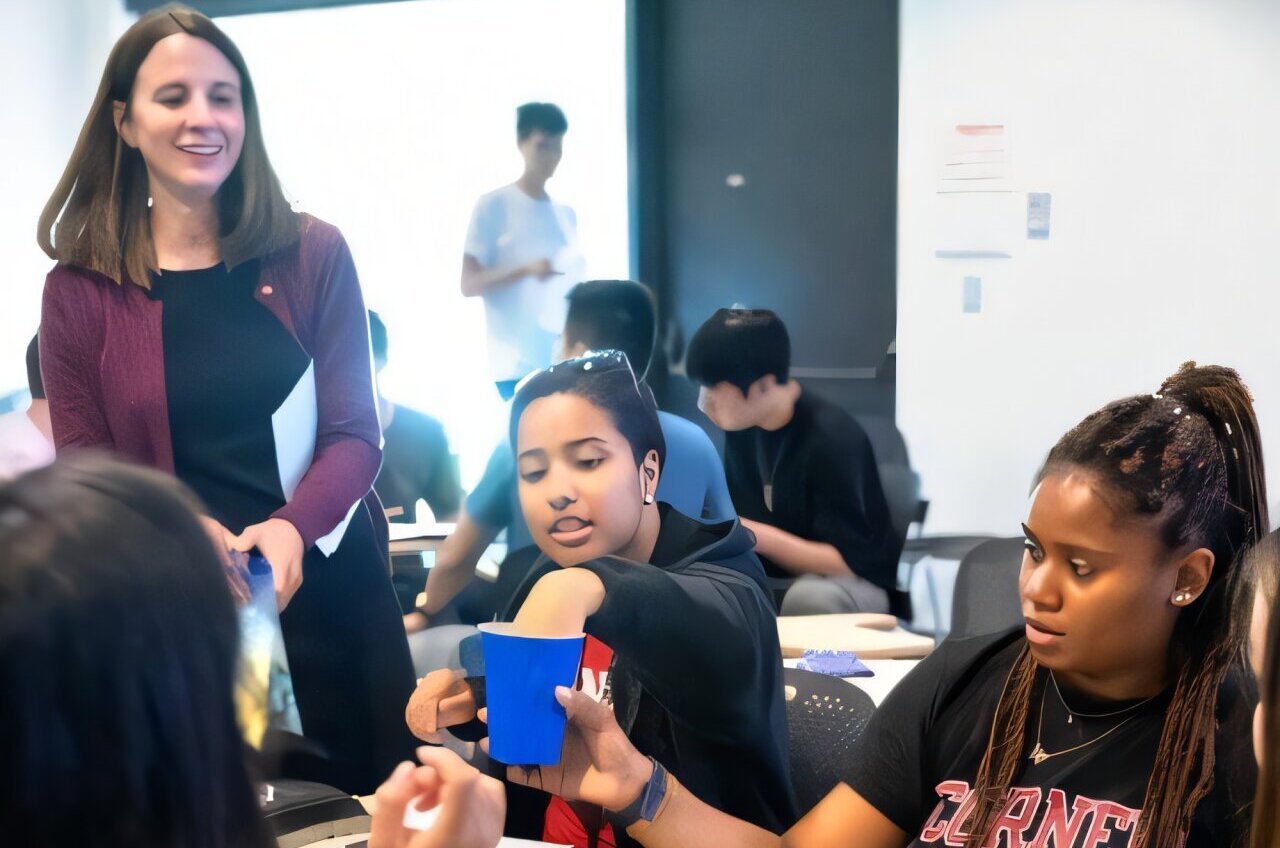
At the same time, universities across the country, with Cornell playing a leading role, began adopting active learning strategies in their classrooms. These approaches reduce reliance on traditional lectures and instead focus on student engagement through problem-solving, discussions, and collaborative activities.
Expanding the Reach of Educational Research
To evaluate the impact of these changes, Treibergs, Smith, and their colleagues compiled a database of 9,792 referenced articles, narrowing it down to 650 publications between 2000 and 2022 that included undergraduate biology lesson plans.
“I coordinated a team of 10 people working on this project,” Treibergs said. “It was a collaborative effort that allowed us to share insights and build on each other’s strengths.”
The study found a notable increase in the number of articles published after 2013 that focused on core concepts and competencies outlined in the “Vision and Change” report. Faculty from New York, California, and Pennsylvania were particularly active in contributing to this body of work, with Cornell faculty and graduate students playing a key role.
Student Involvement and Future Directions
Raudiyah Onimode ’26, a biological anthropology major on the premed track, contributed to the study as part of her work as a Nexus Scholar and researcher in Smith’s lab. She described the experience as eye-opening. “I didn’t even know education research existed, but I quickly learned the skills needed for this work,” she said. “I was involved in analyzing articles, screening content, and providing feedback during the drafting process. It felt like my contributions were truly valued.”
Smith also noted that another factor driving the increase in lesson plan publication is the growing recognition of teaching-focused research in academic evaluations. “Many universities now encourage faculty to include these types of articles in their CVs, which benefits both the authors and other educators.”
Looking ahead, the research team is continuing its work, focusing on how these lessons are implemented across U.S. institutions and their impact on student learning. “We’re having instructors teach the same lesson in different universities and recording what happens in the classroom,” Smith said. “Then, we’re using common assessments to measure student performance.”
This ongoing research has the potential to guide educators in identifying the most effective teaching tools across various fields. “This work can benefit other disciplines as well,” Smith added.