
Robotaxis are expandingto an increasing number of cities, but an AI company namedTensor introduced a driverless car.on Wednesday created exclusively for individual possession.
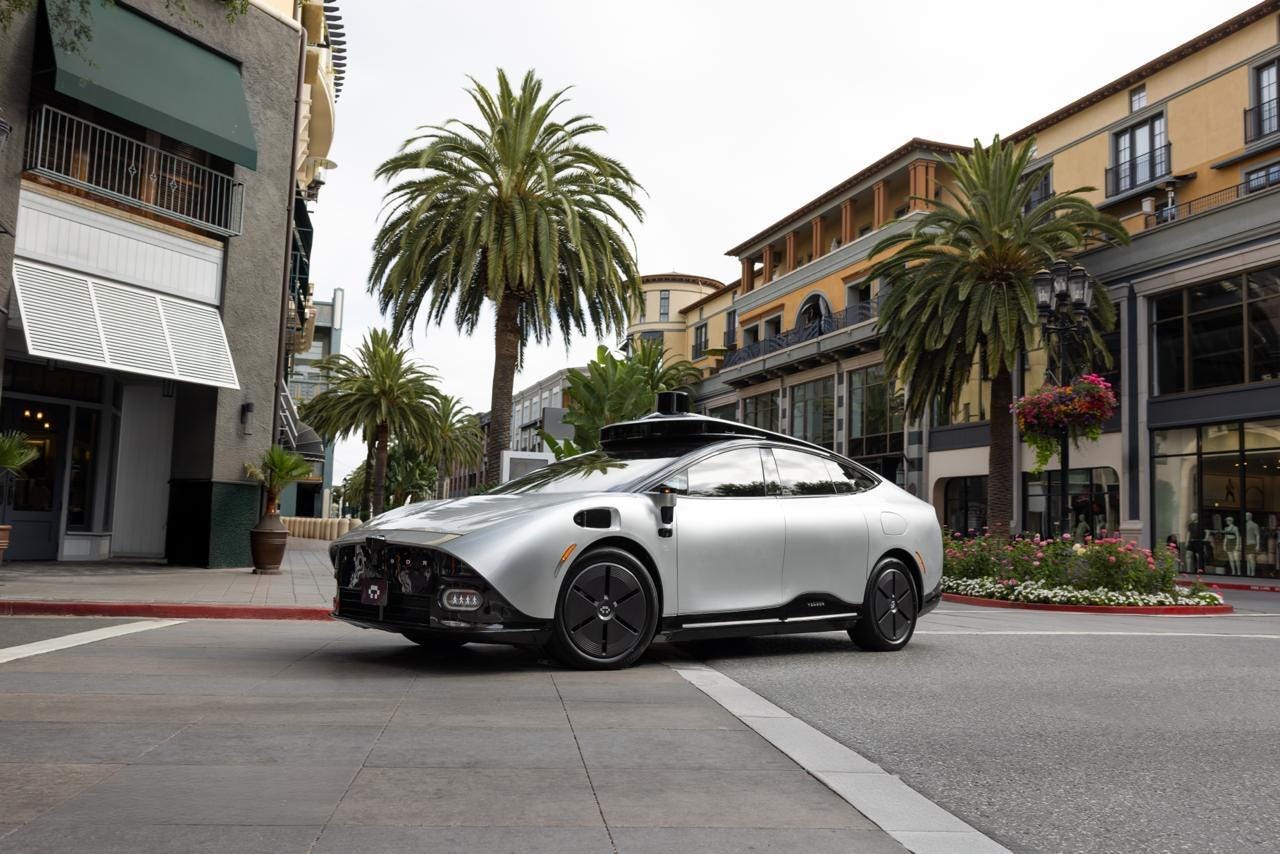
The Tensor Robocar somewhat resembles a combination ofWaymo’s Jaguar I-Pace vehicles and Tesla’s Model Y, featuring streamlined, advanced design elements and a silver color, as shown in apromotional video. In a statement, the company mentioned that the vehicle is equipped with “more than 100 smoothly integrated sensors,” along with 37 cameras, five lidars, 11 radars, 22 microphones, and 10 ultrasonic sensors.
Tensor states that the vehicle hasLevel-4 autonomy, indicating it can operate entirely on its own within a defined area and under specific weather conditions. Robotaxis such as Waymo are also classified as Level-4 autonomous.
The Tensor Robocar is the first mass-produced, consumer-ready self-driving vehicle—designed specifically for widespread private ownership,” the company stated. “While current autonomous vehicles are mainly developed as RoboTaxis—highly maintained, base-dependent fleets—Tensor marks a significant shift: a fully independent personal Robocar built to benefit its owner, not its operator.
Tensor states that its Robocar will be available “in select global markets” within the US, Europe, and the United Arab Emirates, with shipments starting in the second half of 2026. The company has not disclosed a price yet.
The company states that this new vehicle is “built to comply with the world’s strictest automotive regulations.” This encompasses the U.S. National Highway Traffic Safety Administration’s Federal Motor Vehicle Safety Standards, which are intended to guarantee that vehicles and parts such as brakes, tires, and airbags satisfy essential safety criteria. Formerly called AutoX, it has received approval for self-driving tests from the California DMV since 2020.
The Robocar is built to function as an autonomous vehicle. You can issue commands whether you’re inside the car or nearby, Tensor explains. The promotional video features a woman using her phone to say, “Pick me up,” and, “Come now,” while marking the pickup location on a map, and adds, “Turn on the AC,” as she walks towards the vehicle. After getting out, she gives instructions such as, “Open the trunk,” and, “Go find a parking spot.”
What might be most intriguing is that users still have the option to operate the vehicle if they wish. The video displays the woman entering the driver’s seat and pressing a button that causes the dashboard touchscreen to move aside, exposing a steering wheel.
Tensor states that personal information, such as a user’s location, preferences, and records, is “processed and stored locally within the vehicle, providing enhanced security.” The company notes that users can view their data via an end-to-end encrypted smartphone application or the in-vehicle interface. Additionally, if the presence of all cameras and microphones causes concern, Tensor mentions that there are physical camera covers and microphone disable switches available for increased privacy.
A car such as the Tensor Robocar could attract individuals who wish to maintain ownership of a personal vehicle while utilizing self-driving technology. Elon Musk has a comparable vision forTesla’s Robotaxi, which he stated individuals can own while also utilizing them as part of a ride-hailing platform. This vehicle, introduced last year, is expected to begin manufacturing “before 2027,” as per Musk.
However, creating autonomous driving technology is challenging, and launching a vehicle such as the Tensor Robocar by next year could be an ambitious target.
Tensor’s goal of delivering in 2026 is challenging but achievable. I anticipate a restricted launch in certain areas before it becomes widely available to consumers,” stated Shawn DuBravac, president of the consulting firm Avrio Institute. “Providing Level-4 autonomy to individual owners presents a greater challenge than managing a robotaxi fleet. It involves addressing every driveway, every errand, and every unpredictable driver on the road.
Even if the technology is prepared, gaining consumer trust is frequently the most difficult and time-consuming aspect of the process,” he remarked. “Convincing consumers to embrace the business model might present a significant challenge at first.
Paul Miller, a mobility principal analyst at Forrester, stated, “Tensor is making significant assertions about the Robocar, its technology, and the pace at which it can reach the market. Early users might discover that the self-driving features are restricted to certain types of roads or confined to specific city areas, which makes the temporary steering wheel less of a novelty and more of a required component.”
Other businesses, both large and small, are entering the self-driving vehicle market. Waymo, owned by Alphabet, Google’s parent company, is certainly the pioneer, having a robotaxi presence in ahandful of US citiesand further developments — some through apartnership with Uber. Other companies like May Mobility and Nuroare also collaborating with Uber to expand their services to a larger audience. Lyft, in a similar fashion, has a group ofridehailing partnerships. And Zoox, which is owned by Amazon, is preparing to begin commercial operations later this year.
This was first released on Roadshow.
Released on August 13, 2025, at 11:45 a.m. PT.Want to buy a car? Discover the perfect one on the MSN Autos Marketplace.