
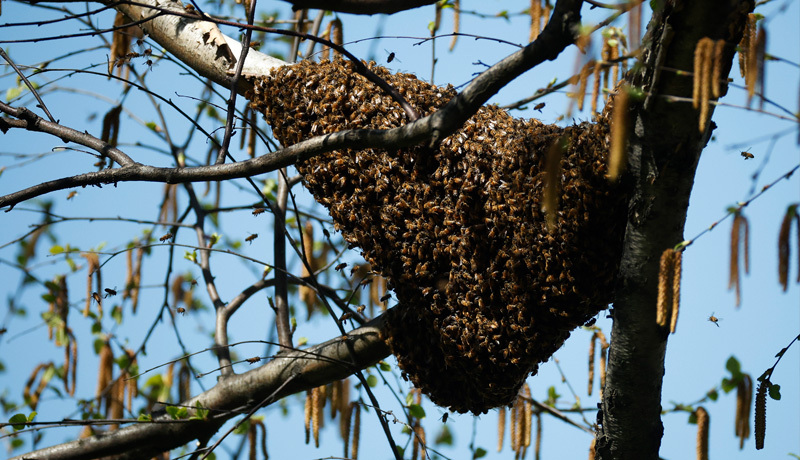
Navigating life in the 21st Century has involved a balancing act between advancement and isolation. Certainly, there are benefits—such as technology, when applied effectively. It has linked us across the globe, provided access to vast amounts of information, and generated fresh possibilities. However, one of the most sorrowful consequences is the gradual disappearance of community, as more individuals turn towards independence and personal focus.
I’ve developed an interest in the characteristics of honey bees and ants.
Recently, I’ve developed an interest in the characteristics of honey bees and ants—organisms that would not be able to live in such solitary environments.
Being the youngest of four siblings, I frequently played the role of the little helper. I dreaded hearing my name called from somewhere in the house. It usually meant there was a chore waiting for me. I remember often thinking, “When will this ever be over?”
Currently in my late 20s, I’m pleased to say… it hasn’t. And no, I’m not being ironic. I truly appreciate that it didn’t. Here’s why.
In the middle of April (2025), my sister Esther called to inform me that our mother was in the hospital. She had been feeling lightheaded and had heart palpitations. It was approximately 6 pm, and I was outside doing the laundry. I let her know I would arrive at the hospital in a short time.
When I arrived, my mother was by herself, appearing sorrowful and exhausted. However, the moment she spotted me, her expression started to lift. I had brought her a cup of warm chocolate and a chicken pie, assuming (correctly) that she hadn’t had lunch, something I often criticize her for. Later, Esther came over, and the three of us hurried back and forth at the hospital counters, handling test payments and organizing matters at the laboratory.
My father called, showing worry. We kindly requested that he not come. He had recently experienced a heart attack in January, and we were concerned about him driving at night. Instead, he contacted our Uncle Charles, who resides nearby. Uncle Charles arrived shortly and proposed that we all go to his house for dinner while we waited for the test results, which would take approximately three hours. It was now 9 p.m.
The power of community.
At his house, something wonderful occurred. The warmth of his family, the conversation and laughter, their presence—everything enveloped my mother like a cozy blanket. She relaxed. She smiled. She started talking again.
As I observed her leaving that house, I understood that she had entered weighed down but departed with a lighter heart. That was the strength of a supportive community.
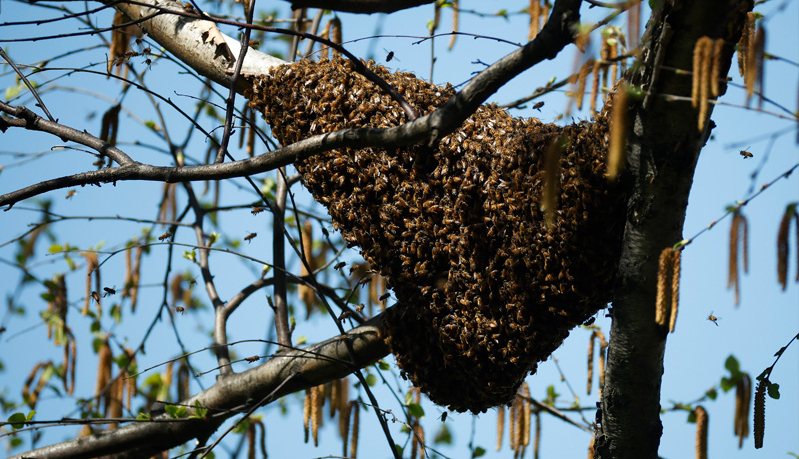
It made me think about how honey bees endure the coldest times: through a big bee embrace. When temperatures fall and food is limited, worker bees—female insects that can’t reproduce—group closely around the queen and younger bees, creating a safe formation.
At this time, the queen ceases to lay eggs in order to preserve the hive’s limited food resources. The worker bees gather tightly, shaking their flight muscles and turning inward so that the bees in the center can access the stored honey. The combined warmth they produce is sufficient to maintain the entire colony’s temperature during the winter.
God did not intend for us to go through life by ourselves.
That evening, I witnessed the human equivalent of it. My family gathered around my mother and hummed until she became warm once more. Just like the bees, God did not intend for us to endure life by ourselves.
We were born with a strong, undeniable desire for connection, built to flourish in relationships that support us through life’s challenges and triumphs. Regardless of your relationship status or where you reside, your heart was intended for community—genuine, meaningful, soul-enriching companionship that reminds you that you are noticed, understood, and never by yourself.
We are all interconnected.
Romans 12:4–5 says:
Just as the human body consists of various parts, each with its own specific role, so it is with Christ’s body. We are all different parts of the same body, and we are connected to one another.
It was a lesson I had to experience the tough way after moving out from my parents’ home. I was excited to finally taste freedom and committed to handling everything by myself. The amusing part? I didn’t even make it through the week. I needed my brother Roy to drive nails into the walls and put in all the light bulbs—I was too short to reach them!
Although the quiet in my small space could be calming at times, there were moments when it seemed as if something was absent. No one was calling out to me for assistance. Helping others had transformed into an essential part of who I am.
Eventually, those quiet times were once again filled with calls from home asking me how to use a new device, organize the next family meal, or arrange someone’s birthday. Bible study sleepovers with my friends have turned into one of my favorite nights each month. And to be honest, I think I’ve realized that sometimes, community means being there and making your presence felt when it’s most important.
Originally published by A Rocha International. Republished with permission.
Sylvia Muiais the Communications Director forA Rocha InternationalBased in the lively Nairobi city, Sylvia links A Rocha to the global community through innovative writing and social media updates. Sylvia is a qualified journalist with a degree in Corporate Communications and Administration. Occasionally, you might find her knitting, painting, or preparing cottage pies when she’s not catching up on her favorite series.