President Donald Trump and his allies are charging ahead with plans to try to redraw the congressional map in red states beyond Texas, pressuring GOP lawmakers to act and setting up an all-out push for political advantage that will be difficult for Democrats to match ahead of the midterms.
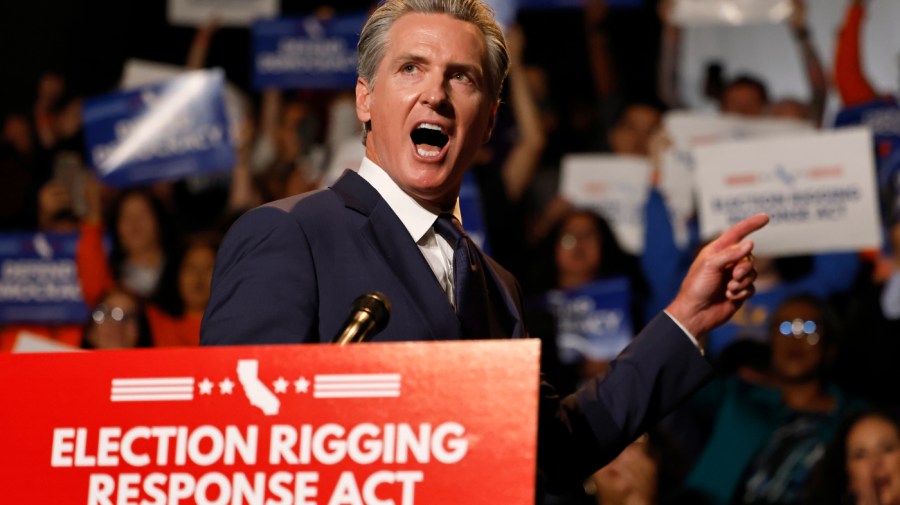
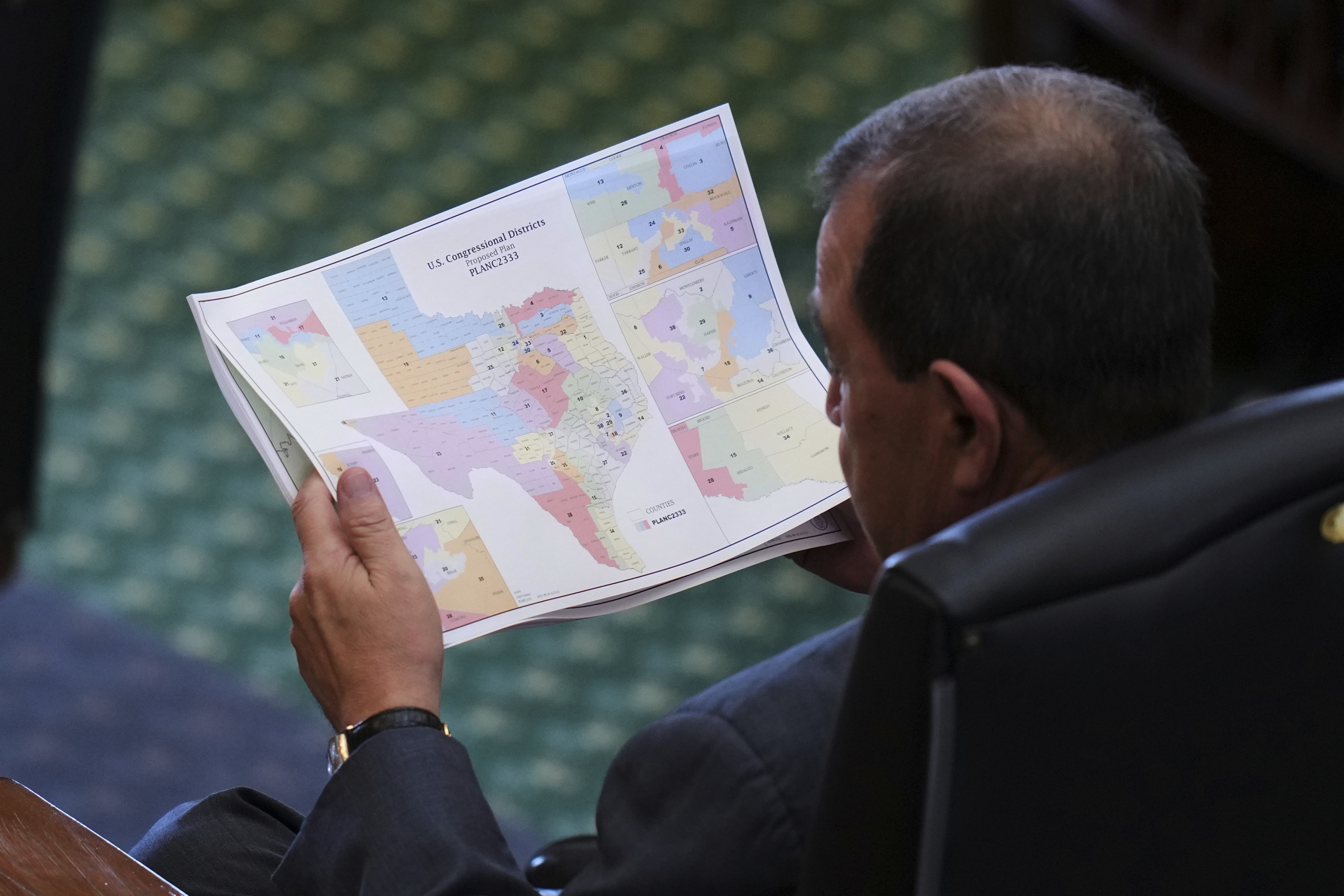
Republican state lawmakers early Saturday approved an unusual mid-decade redraw of the U.S. House districts in Texas, adding five red seats on a new map that Trump advocated. Democrats in California retaliated by passing bills that will ask the liberal state’s voters to add five blue seats in a November special election. Now the legislative action in a nationwide redistricting battle is set to move to Missouri and three other Republican-controlled states.
Democrats have repeatedly promised to “fight fire with fire,” relying on the states they control. But they face more obstacles — and have taken few concrete steps toward redrawing blue-state maps outside California.
Many state Republicans balked at redistricting outside the usual census-driven schedule, reluctant to shake up existing lines and use their political capital on such a divisive move. But Trump’s team — backed up by activists threatening primary challenges — have pushed forward. Changing the maps could help Republicans maintain their narrow control of the U.S. House in 2026, paving the way for Trump’s agenda and preventing Democrats from using the House to launch investigations or impeachment proceedings.
“Our more moderate members in both the House and Senate — this is not something they would be inclined to do,” said Gregg Keller, a Republican strategist in Missouri, the next red state expected to redraw its maps. “However, when it became clear that these calls were coming directly from the president, directly from the White House, that this was part of a larger national strategy, they realized they were going to need to go along with it whether they liked it or not.”
Federal law restricts the political activities of federal employees. But White House staff have been acting in a personal capacity while discussing redistricting with state Republicans, said a person familiar with the effort, who like some others interviewed for this story spoke on the condition of anonymity to describe private conversations. James Blair, the White House deputy chief of staff for legislative, political and public affairs, has been leading the effort.
Missouri is expected to add one more red seat — likely after state lawmakers return to the Capitol on Sept. 10, according to people familiar with the plans. Trump got ahead of state Republican officials on Thursday, saying on Truth Social that Missouri “is IN.”
Trump has spoken directly with Missouri Gov. Mike Kehoe (R) about redistricting, two people familiar with the discussions said. White House staff, acting in a personal capacity, have discussed the matter with members of the state’s congressional delegation and also called state lawmakers — including the openly skeptical Missouri House Speaker Pro Tem Chad Perkins, according to Perkins and others told about the outreach.
State leaders are assessing “options for a special session” to redraw the maps, Kehoe spokesperson Madelyn Warren said after Trump’s social media post. Warren said the governor “regularly speaks with the President on a variety of topics” but has not discussed “any specific or potential maps” with him.
The White House did not respond to a request for comment.
In Indiana, state Republicans also face mounting pressure to get on board with a redraw that would be likely to give the GOP one additional red seat. Vice President JD Vance discussed the issue with state leaders in person this month, and White House staff have been calling state legislators, according to Republicans in the state.
“The pressure from the White House is intense,” said Republican state Rep. Ed Clere, who said he has not been contacted but knows others who have. Clere has previously said special sessions “should be reserved for emergencies,” and that Trump’s “desperation to maintain a U.S. House majority by stacking the deck in favor of Republicans does not constitute an emergency.”
Every member of Indiana’s congressional delegation got on board with redistricting this past week. Recorded calls from a group identifying itself as Forward America have urged Indiana residents to call their legislators in support, according to the Indianapolis Star and other news outlets. The Washington Post could not reach Forward America for comment.
Trump ally Charlie Kirk, the founder of Turning Point USA, said his organization would back primary challenges to state lawmakers “who refuse to support the team and redraw the maps.”
The White House is hosting Indiana Republicans in Washington on Tuesday — part of a series hosting various states. Cabinet secretaries, senior White House officials and members of the Domestic Policy Council will join and take questions, according to an invitation. Clere said he is not attending.
Indiana House Speaker Todd Huston (R) has also been reluctant to redraw the map, according to a person familiar with the matter. A spokeswoman for Huston said he has not taken a position. Gov. Mike Braun (R) recently said he has not decided whether to call a special session.
Others have been openly skeptical. “Please help me understand the push to pick up MAYBE 1 Congressional seat while putting many good state elected officials at risk because of a political redistricting stunt!” state Rep. Jim Lucas (R) said on social media.
Trump’s team is optimistic they will persuade Indiana Republicans and have not “put their back into it” yet, said one person familiar with the redistricting effort. “I think they will all come to the realization this isn’t going away,” the person said of state Republicans.
In Trump’s home state of Florida, top Republicans have expressed support for a redraw and gone further by asking the federal government to grant Florida an extra U.S. House seat.
Florida Attorney General James Uthmeier recently sent a letter to the U.S. Department of Commerce, which oversees the census, arguing that the state should have gotten more representation after 2020 and that Florida “should not have to wait” for the next one. The Commerce Department did not respond to a request for comment about the letter.
“Obviously we’d love to do it before the midterms next year,” Uthmeier said this week at a news conference.
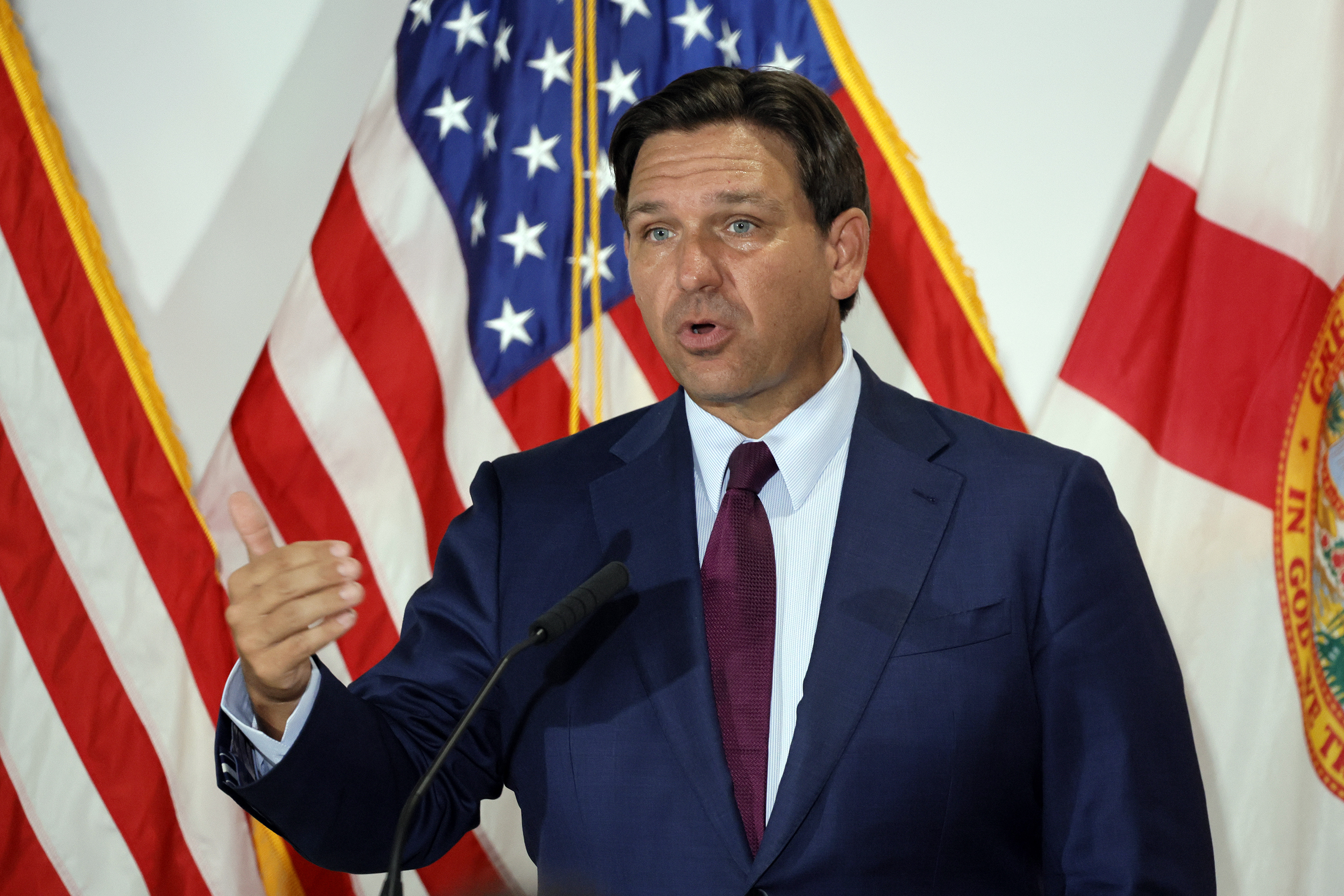
Florida Gov. Ron DeSantis (R) has said he supports redrawing the map even without a census revision. And Florida House Speaker Daniel Perez (R) moved this month to create a “select committee” on congressional redistricting.
A redraw in Ohio could also net the GOP two to three more seats, people familiar with the redistricting effort said. Ohio was already set to redistrict this year.
Both Florida and Ohio have language in their state constitutions saying that — in at least some circumstances — districts should not be drawn to favor one political party. But Florida’s Supreme Court recently rejected a challenge to the current maps based on the state’s “Fair Districts” rules, and Ohio’s Supreme Court has shifted to the right since past rulings rejecting maps for violating the state constitution.
Democrats are eager to hit back by squeezing more blue congressional seats out of states they lead. But they control fewer states than Republicans and in some cases have to overcome independent redistricting commissions meant to prevent gerrymandering.
New York could change its constitution to circumvent an independent redistricting body, but would not be able to complete the changes before 2026 midterms. Democrats have also floated redistricting in Maryland and Illinois, but the congressional maps there already favor their party, leaving limited room for gains. California’s effort to add blue seats has helped persuade GOP officials beyond Texas to act, Republicans said.
States have redrawn their maps in the middle of the decade before, often in response to a court order, said Doug Spencer, a law professor at the University of Colorado at Boulder with expertise in redistricting. But he said this year’s scramble — and Trump’s role in pushing states to act — is unprecedented.
“We’ve never seen anything like this,” he said.
Democrats in red states met Thursday to develop strategies to fight redistricting. Texas House Minority Leader Gene Wu (D) addressed the meeting organized by the Democratic Legislative Campaign Committee, telling the group that while he and his colleagues could not stop Republicans’ efforts in Texas, they were able to draw attention to it.
“People understand you’re going to lose,” he said, according to a video of the meeting. “But they like it when people take a stand. They like it when people are willing to fight, even going down. America loves an underdog.”
Republicans are still mulling redraws in other states.
In deep-red Kentucky, Republicans faced some pressure to make all six of the state’s House seats red-leaning in the last round of redistricting, according to Tres Watson, a GOP consultant there. But GOP officials declined to do so, concerned that divvying up the lone Democratic seat could result in two seats not guaranteed to go Republican.
On Friday, however, Watson said there is new GOP interest in redrawing the map after Andy Beshear, Kentucky’s Democratic governor, praised California’s efforts to redraw their maps in response to Texas.
A redraw before 2026 would be difficult because of campaign filing deadlines, Watson said. But Kentucky state Rep. Jason Nemes (R) said in an interview that legislators could extend the deadlines. “The governor’s kind of daring us to do it with his comments,” Nemes said of a redraw.
Patrick Marley contributed to this report.