
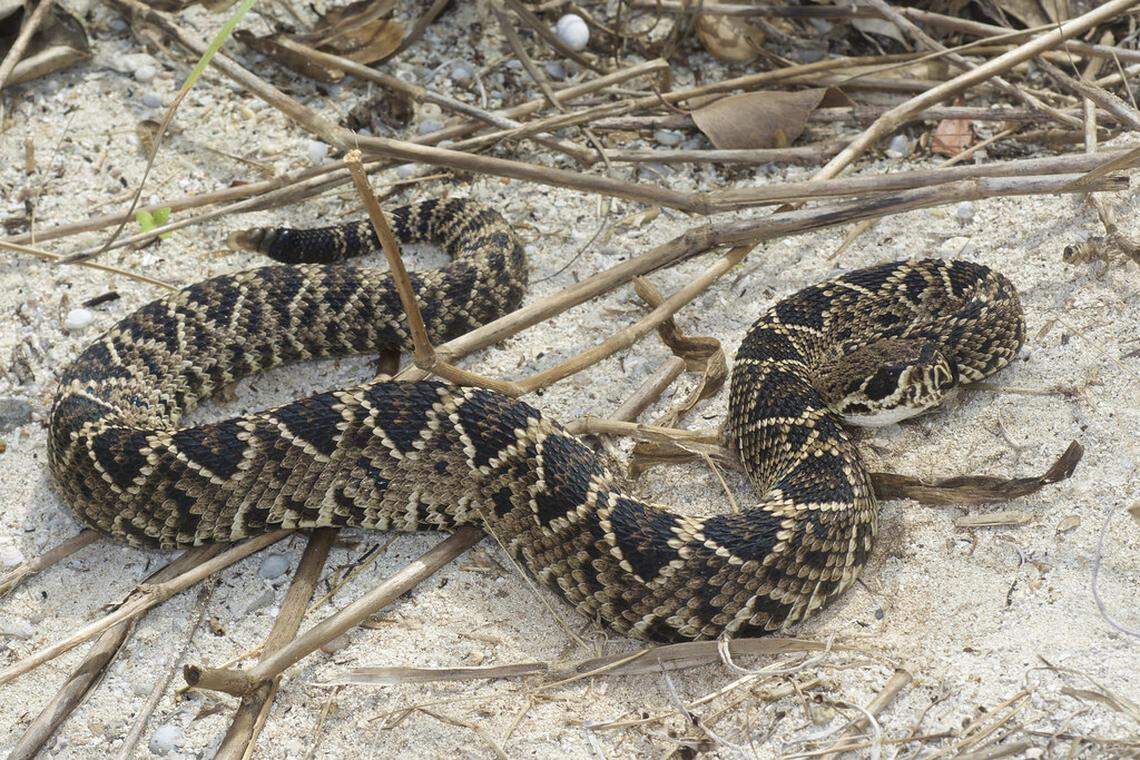
You might think the black bear or bobcats are the deadliest animals in South Carolina but the truth is the distinction goes to something a lot more commonplace.
Snakes and spiders.
World Atlas has devised a list of the 11 deadliest animals in South Carolina and at the top of the list is the Eastern diamondback rattlesnake, which they called formidable.
Found in pine forests, coastal dunes and dry, sandy areas, they are nothing to mess with since their venom is potent. They are the largest venomous snake in North America.
They don’t like people and don’t even like each other, only interacting during mating season. They are territorial, active during the day in the cooler months, and nocturnal during the summer.
World Atlas says their venom can cause internal bleeding, hemorrhage, necrosis, and fibrinolysis and their bite spews out a lot of venom.
They’re hard to see, but if you can hear that distinctive sound of their rattle. Move away. If they’re coiled, hissing, and swaying their head, move away faster.
If you’re not fast enough and get bit, keep the bite below the heart to slow the spread of venom and seek medical help immediately. Do not use a tourniquet or cut the wound.
The cottonmouth is the second deadliest animal and is found near swamps, rivers, lakes and streams. They are excellent swimmers. And they are aggressive. Threaten them and they will respond.
“Warning signs of an attack include mouth gaping, coiling, tail vibrating, and hissing,” World Atlas said.
Most active during the warmer months, they feed on fish, amphibians, small mammals and birds, World Atlas said. A bite can be fatal without prompt treatment and can cause swelling, necrosis, breathing difficulties, and shock.
Yet another snake makes the list of South Carolina’s most deadly animals – the timber rattlesnake, which live in forests, rocky outcrops and the mountains.
They prey on small mammals and birds.
Again, the venom can be life threatening if not treated promptly. Bites can destroy tissue, disrupt blood clotting and cause severe pain and swelling.
“Death is rare because of the access to antivenom,” World Atlas said.
South Carolina’s most populous snake, the copperhead, also makes the list.
“Its bite is rarely fatal but can cause significant pain and tissue damage,” World Atlas said.
They live all over the place – forests, grasslands, swamps, rocky hillsides and while hiding simply wait for mice, voles, birds, amphibians, and insects to come by.
“When they feel threatened, they will freeze in place, using their camouflage to avoid detection,” World Atlas said.
You might also see them coiled and hear a warning sound in the leaves.
Fifth on World Atlas’ list is the black widow spider, which they called infamous.
They have a black body and are easily recognizable by their red hourglass marking.
They like warm, dry environments and are at home in woodpiles, garages, basements and sheds. They are solitary and move about at night.
They’re going to bite you in self defense if you disturb their web but the venom is rarely fatal. It can cause severe pain, cramps, nausea and difficulty breathing.
The brown recluse spider is next on World Atlas’ list. It’s identified by a violin-shaped marking on its back and six eyes arranged in three pairs.
They live in attics, basements, closets and behind furniture, seeking warm dry areas.
They don’t build webs but instead ambush their prey. They are more likely to run away if threatened by a human, but they will bite if they feel trapped.
Next up is most everybody’s favorite animal to fear, the American alligator.
Look for them in swamps, marshes, rivers and other fresh bodies of water. They have been seen along the oceanfront but that is not common.
South Carolina alligators, numbering about 100,000, can live to be more than 60 and grow to more than 13 feet, South Carolina Department of Natural Resources said.
“They are ambush predators, waiting for the opportune time to capture unsuspecting prey and performing the iconic death roll to take them down,” World Atlas said.
Six people have been killed by alligators in South Carolina since 2016, the most recent in 2023 when a 69-year-old woman was attacked while walking her dogs on Hilton Head Island.
“Warning signs of an attack include bellowing or vocalization, hissing and jaw clapping, and approaching,” World Atlas said.
The bull shark is notorious, known for being able to live in salt and freshwater, in warm coastal waters, near shorelines, estuaries, and river mouths.
“They are often seen in shallow waters with depths of less than 100 feet,” World Atlas said. “Opportunistic predators, they feed on fish, turtles, birds, and even dolphins. They are known for their aggressive hunting tactics, ramming their prey before delivering a fatal bite.”
They are more likely than other shark species to attack people unprovoked.
Warning signs of an attack are jerky swimming behavior and arching their back with rapid side-to-side movements.
Portuguese Man o’ War, often mistaken for a jellyfish, has tentacles equipped with specialized cells called nematocysts, which contain venom. This is how they snare their prey, usually small fish, plankton, and other marine invertebrates.
“The venom of their tentacles is formidable, delivering painful stings,” World Atlas said. “A sting from the Portuguese Man o’ War can cause welts, fever, and severe pain.”
There are no warning signs of an attack since the animal just floats along with the ocean currents.
“If you are stung, do not scrub the area. Rinse it with seawater, as fresh water can cause more venom to be released. Remove any remaining tentacles from the skin and apply vinegar to neutralize the venom,” World Atlas said.
Ticks are next on the list and described as an infamous disease-carrying parasite. They have eight legs and are typically brown, reddish-brown, or black.
They live in both forests and grassy fields and like humidity.
“Ticks are opportunistic feeders, attaching to any suitable host that passes by,” World Atlas said. “They use their specialized mouthparts to pierce the skin and remain attached for several days, engorging themselves on the host’s blood.”
They carry diseases such as Lyme disease, Rocky Mountain Spotted Fever, Ehrlichiosis, Anaplasmosis, Babesiosis, and more.
Then comes that seemingly neverending pest – mosquitoes
“One of the most dangerous animals in the world, the mosquito poses a significant health risk as a vector for disease,” World Atlas said.
They are everywhere in the world, except Antarctica.
Mosquitos can carry and transmit malaria, dengue fever, Zika virus, yellow fever, and West Nile virus.