
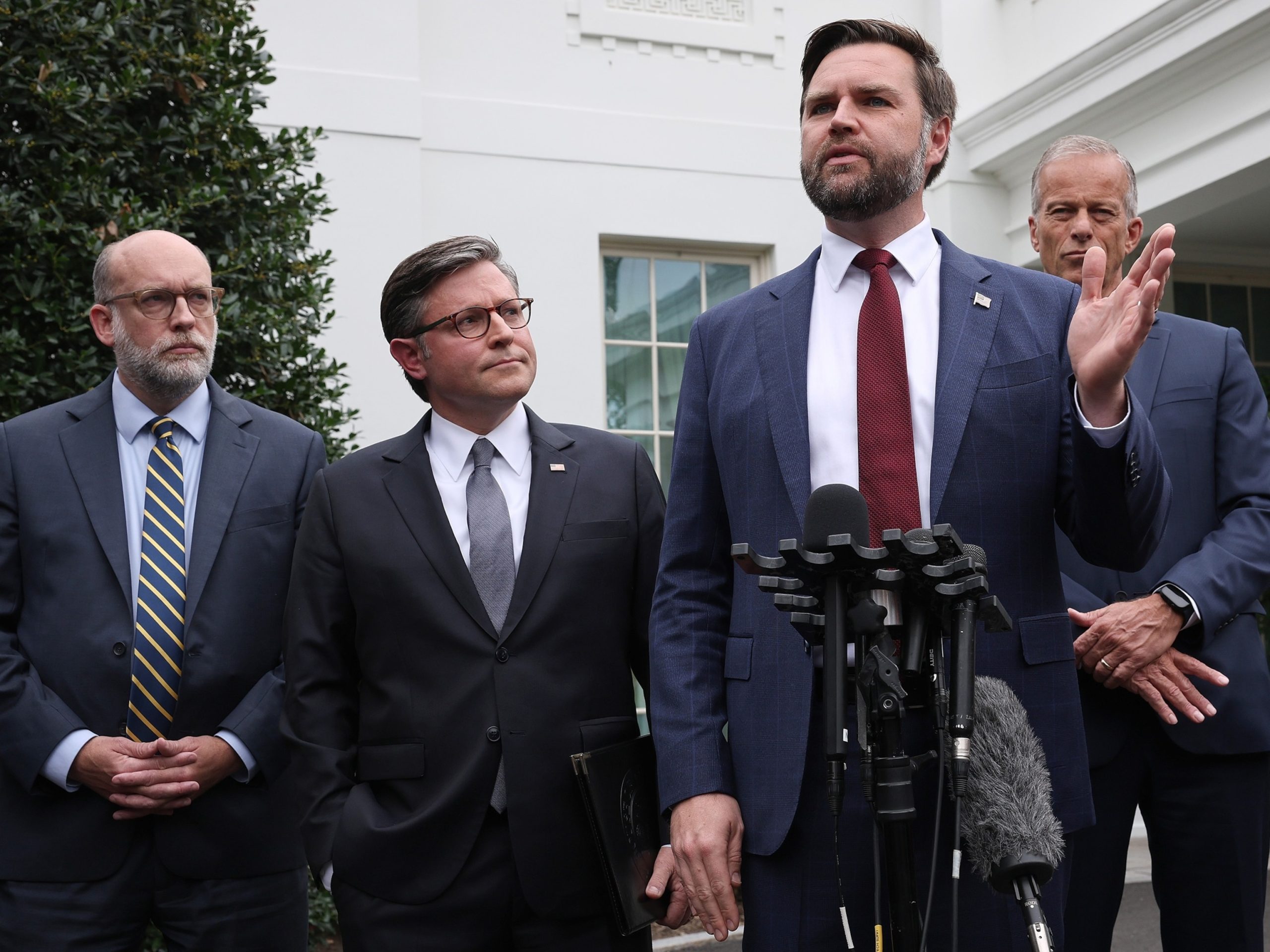
Leaders of Congress departed a meeting with the PresidentDonald Trumpat the White House on Monday afternoon, with no agreement reached to prevent a government shutdown that might begin less than a day later, on Tuesday evening.
Following the meeting, leading Democrats and Republicans exchanged accusations over a possible government shutdown in the event of a funding gap in the federal government by the end of Tuesday.
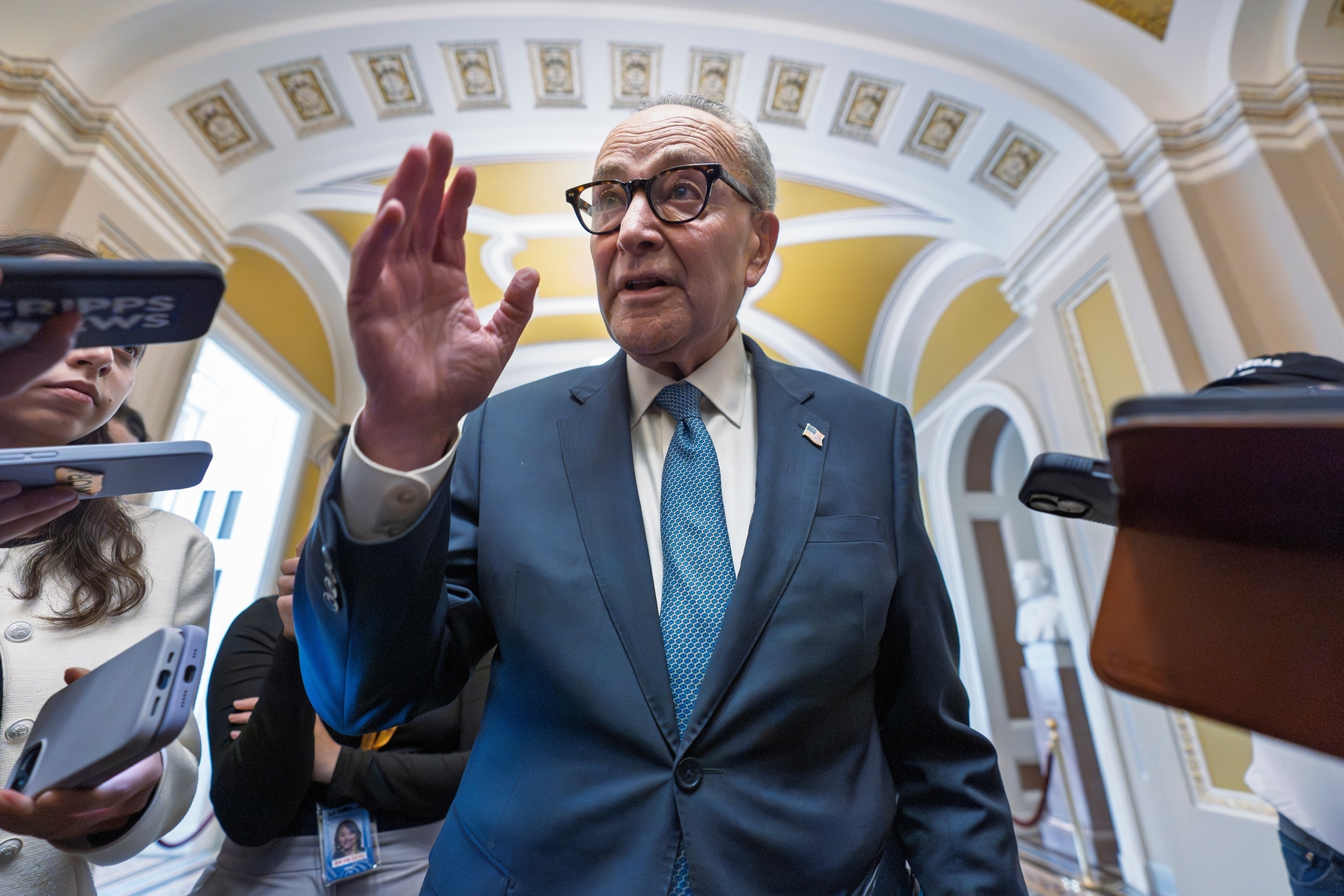
Senate Minority Leader Chuck Schumer informed reporters in the White House parking area that “significant gaps” still exist — especially regarding healthcare.
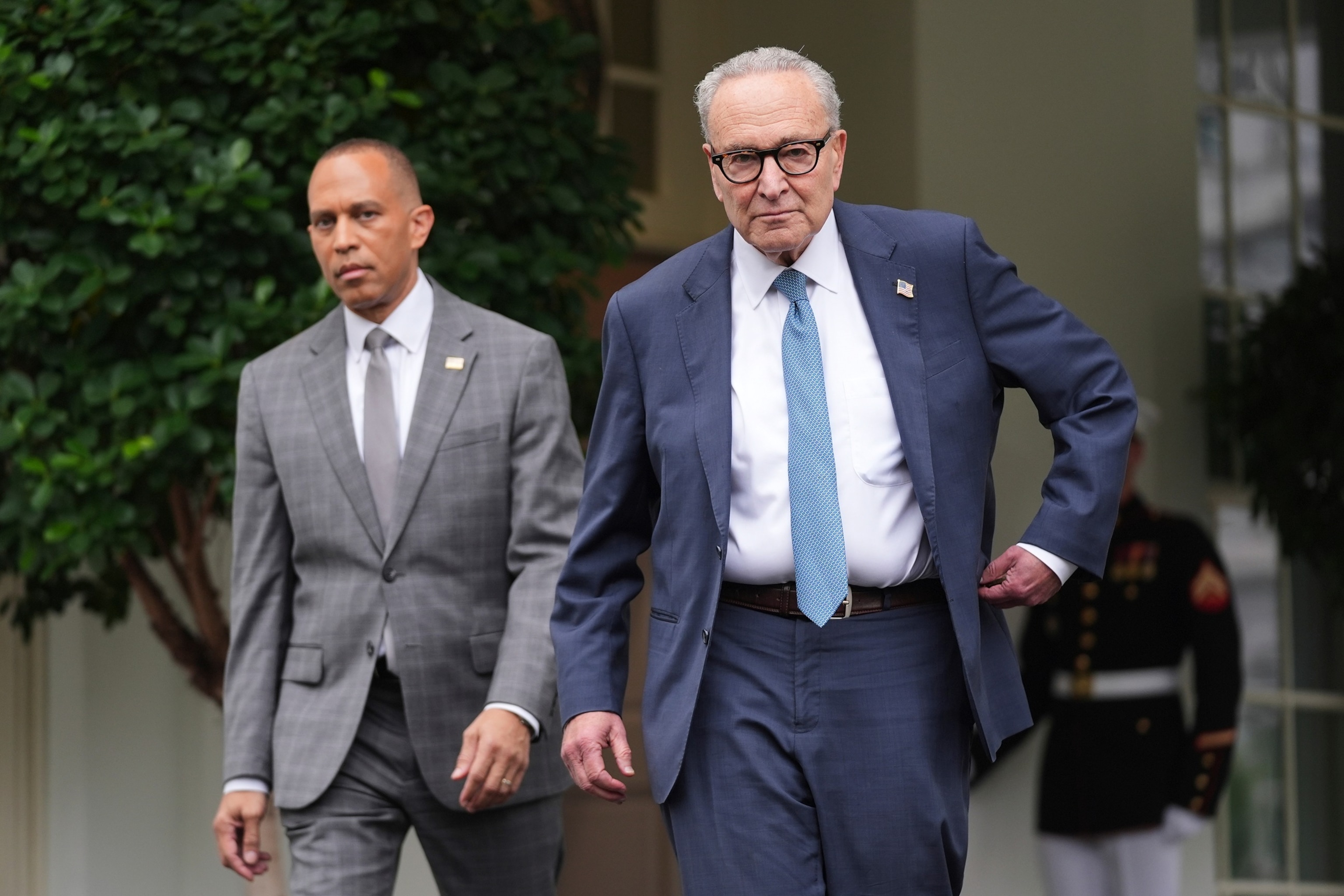 Jeffries states he is ‘optimistic’ that a government shutdown can be prevented.
A short time later, Vice President JD Vance aligned with Republicans in stating that a government shutdown was becoming more probable.
“I believe we are moving towards a shutdown because Democrats are not taking the correct action,” Vance stated.
Back at the Capitol, accusations were still being exchanged.
“They simply aimed to delay addressing the healthcare issue,” Schumer said to reporters.
“If the government closes, it’s because Republicans have chosen to close it and harm the American people,” said House Minority Leader Hakeem Jeffries.
The intense meeting with Trump was a final attempt by both parties to reach an agreement. Without a deal, the likelihood of a government shutdown beginning early Wednesday morning seems higher.
Just before the meeting, White House press secretary Karoline Leavitt stated that there is “nothing to negotiate” with bipartisan congressional leaders on Monday — as the administration keeps urging lawmakers to approve a short-term funding measure called a clean continuing resolution.
Our message and our goal are straightforward: The president aims to maintain an open government. He also wants the government to remain adequately funded. There is no valid reason for Democrats to oppose this clean continuing resolution,” Leavitt said to reporters at the White House on Monday morning. “The president is offering Democrats one final opportunity to act sensibly today.
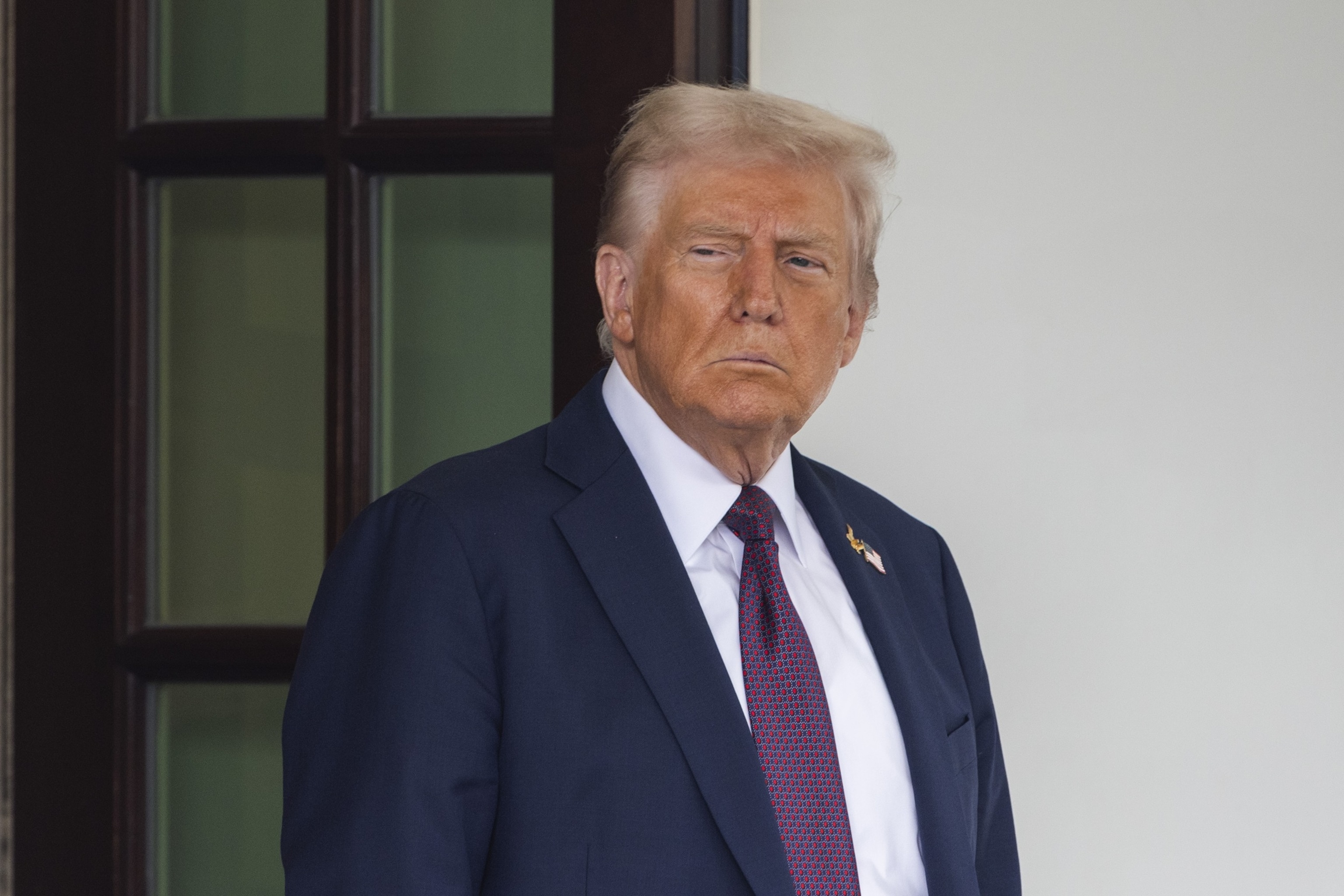
Lawmakers from across the political spectrum are preparing for the Tuesday night deadline—with Democrats insisting they won’t support keeping the government running without significant healthcare demands.
Those requests involve reversing $1 trillion in Medicaid reductions that were enacted this summer, along with a long-term continuation of the Affordable Care Act subsidies, which are scheduled to end by the end of the year. This would help preserve health insurance for 3.8 million individuals at an expense of $350 billion over the next ten years, as reported by the Congressional Budget Office.
House Democrats and Senate Democrats are in agreement,” Jeffries said to reporters on Monday morning at the Capitol, noting that he was going to the meeting for “a sincere discussion about safely landing the plane without causing a government shutdown, but also without allowing the Republican attack on the healthcare of Americans to continue.
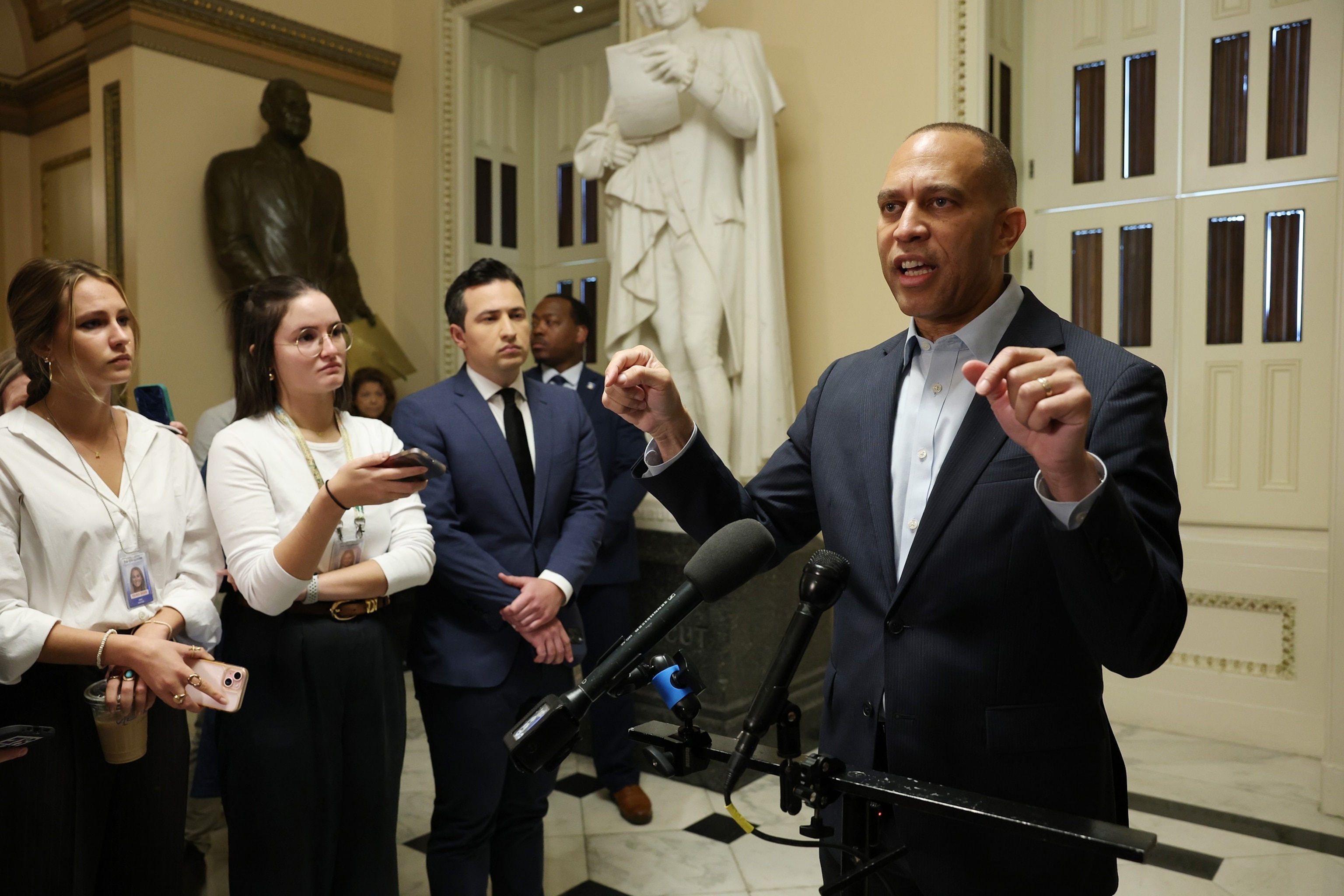
The gathering represented the first time that the congressional leadership from both houses and across party lines met in person during Trump’s second term — and followed a meeting that had been planned for last week but was canceled by the president after he reviewed a Democratic proposal and decided that the meeting would not be beneficial.
“Republicans hold the majority in both the House and the Senate, and as a Republican president, if the government closes, it’s due to Republicans’ decision to shut it down,” Jeffries stated.
Following the White House gathering, certain Democratic senators seemed prepared to accept responsibility for a government shutdown due to their insistence on reinstating healthcare funding.
“Well, there will be finger-pointing, and you all will be deciding who to hold responsible. But the bottom line is that this is a shared issue,” said Sen. Peter Welch of Vermont. “So you have a situation where there have been no talks [from Republicans], and then you have this health care crisis, which is a major concern for us,” Welch added.
Virginia Senator Tim Kaine, who represents a state that has the second-most federal workers, expressed worries about the shutdown’s possible effects and the extra job cuts that Trump has warned about. However, he still thinks this is the time for Democrats to stay firm.
I don’t believe there’s an issue with wanting a deal to be honored and addressing healthcare concerns for my voters,” Kaine said to reporters on Monday night. “I mean, isn’t this how it’s typically handled? We’re open to discussions. President Trump told the House not to engage with Democrats when developing the proposal. We presented our own option. Is there something wrong with offering an alternative?
The meeting on Monday was scheduled following Schumer’s request to Senate Majority Leader John Thune for assistance in reaching Trump, as reported by a Schumer spokesperson — although Jeffries does not appear concerned about prolonged discussions.
Last week, the White House provided direction to federal agencies indicating they should take into accountcarrying out a staff reductionfor federal employees whose roles are not considered necessary for government functions — a strategy aimed at intensifying pressure on Democrats, who have expressed a commitment to safeguarding a federal workforce that has already been reduced under the Trump administration.
Federal courts could experience reduced activities if the government closes down.
Although House Republicans approved a temporary measure to keep the government operating until November 21, the proposal is facing delays in the Senate, where at least seven Democratic lawmakers need to support any bill that prevents a government shutdown.
Republicans developed a “clean” seven-week temporary measure to gain additional time for congressional budget committees to handle the standard process: 12 individual full-year funding measures. Congress has not approved all 12 appropriation bills through regular procedure since 1997, and this process has only been completed four times since 1977 when the current budget rules were implemented.
Speaker Mike Johnson stated over the weekend that approving the temporary continuing resolution is “gaining some time” for the standard funding procedures.
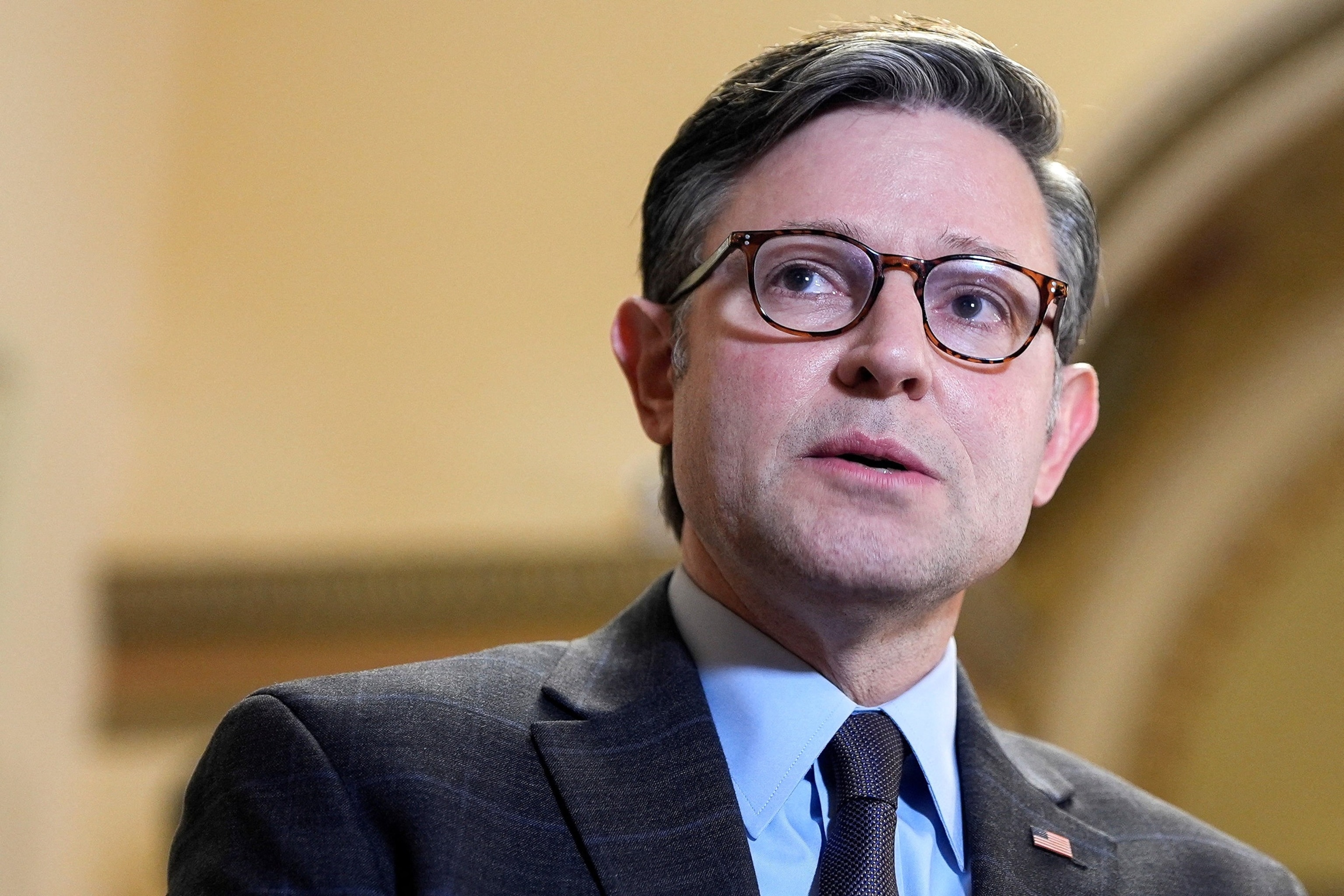
“The Obamacare subsidies are a policy issue that needs to be decided by the end of the year, December 31 — not now, while we’re just trying to keep the government running so these discussions can take place,” Johnson said on CNN on Sunday.
The U.S. federal government has experienced 10 shutdowns caused by a failure to pass funding bills since 1980, with the most extended closure lasting 35 days under President Trump’s initial term.
ABC News’ Jay O’Brien assisted in this report.