A New Hope for Peace in the Gaza Strip
Two years have passed since Hamas launched a deadly terrorist attack against Israel on Oct. 7, 2023, and now, there is a glimmer of hope for peace in the Gaza Strip. President Donald Trump has been actively pushing for a resolution to the conflict, and it seems that his efforts are beginning to bear fruit.
Ongoing Negotiations
Israeli and Hamas officials have started indirect negotiations in earnest in Sharm El Sheikh, a Red Sea resort city located on Egypt’s Sinai Peninsula. The talks are being held under the pressure exerted by Trump on Israeli Prime Minister Benjamin Netanyahu. Additionally, Arab and Muslim leaders are playing a crucial role in applying leverage on Hamas to commit to a ceasefire and the release of hostages. There is a growing international demand for an end to the war.
Netanyahu’s Perspective
For Netanyahu, Trump’s plan presents the best opportunity to quickly free 20 living hostages and recover the bodies of 28 others. This would require a retreat from a massive military campaign that has deeply divided Israeli society. However, the goals of Hamas remain unclear, as much of its senior leadership has been decimated. Trump has offered amnesty or exile in exchange for agreeing to his 20-point plan for peace.
Trump’s Optimism
Trump expressed optimism about the negotiations, stating that he expected them to conclude within days. His senior officials mentioned that the talks are meant to finalize details of a ceasefire, hostage release, and Palestinian prisoner exchange. During a press conference in the Oval Office, Trump said that Netanyahu was “very positive on the deal” and that Hamas had been “fine” during negotiations. He added, “I hope it’s going to continue that way. I think it will. I really think we’re going to have a deal. We have a really good chance of making a deal. And it will be a lasting deal.”
A Sense of Hope
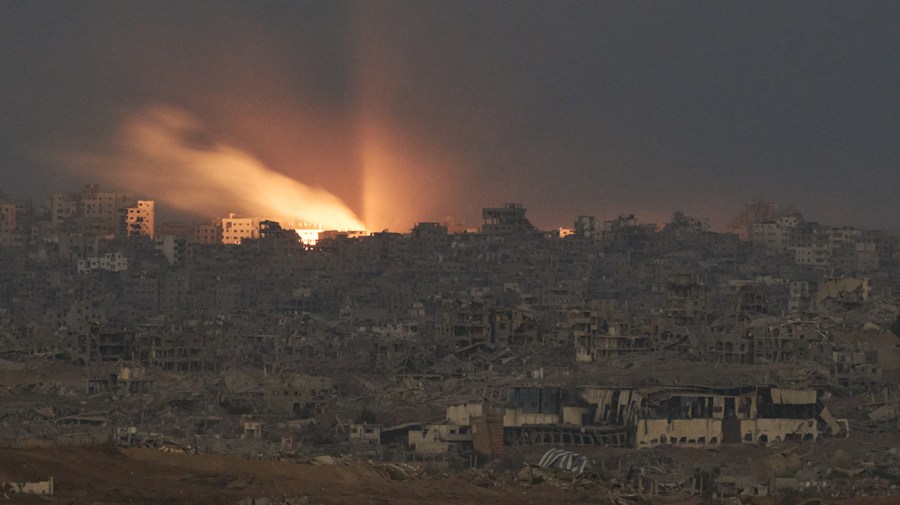
Establishing a ceasefire would mark the first major pause in fighting since March. However, the truce at that time broke down over accusations of violations by both Israel and Hamas and failure to move to a second stage of talks over a pathway to end the war. Yossi Klein Halevi, a senior fellow at the Shalom Hartman Institute in Jerusalem, expressed a sense of hope, saying, “I’m feeling hopeful.”
International Pressure
Trump has been applying pressure not just to Hamas but also to Netanyahu. Dennis Ross, a counselor and fellow at the Washington Institute and veteran Israeli-Palestinian negotiator, noted that this level of American commitment is creating a sense of momentum that has not been seen before.
Involvement of Key Players
Dana Stroul, who served as deputy assistant Defense secretary for the Middle East in the Biden administration, highlighted the role of Turkey, Qatar, and Egypt in pressuring Hamas to come to the table. She explained that these longtime hosts, who have engaged with Hamas over the years, are all aligned in pressuring the group. Trump himself emphasized this during his remarks in the Oval Office, mentioning that President Erdoğan of Turkey has been pushing very hard to get the deal done.
Sticking Points
Despite the optimism, veteran diplomats see Hamas employing a standard playbook to draw out negotiations to preserve their own survival. Dana Stroul pointed out that the sticking points are back to the future, with Hamas offering a conditional “yes” but focusing on implementation details. Hamas has not explicitly agreed to hand over its weapons or give up political participation in a future Palestinian government.
The Carrot and Stick Approach
A major incentive for Hamas to come to the table is getting Israel to cease its military bombardment. Trump’s plan also promises to secure the release of 250 Palestinians serving life sentences in Israeli jails, plus 1,700 arrested after Oct. 7. Additionally, Trump is offering to get Israel to transfer to Hamas the remains of 15 Palestinians for every one body of an Israeli hostage.
Challenges Ahead
While securing a commitment to a first phase of a ceasefire and hostage release deal would be a significant achievement, it would only be the first step in what is viewed as one of the most challenging diplomatic negotiations to resolve. Ahmed Fouad Alkhatib, head of the Realign For Palestine project at the Atlantic Council in Washington, D.C., warned that Hamas may try to retain small arms to exert control over pockets of Gaza and seek to influence any technocratic governing structure meant to reconstruct the enclave.
Uncertain Future
Another open question is how engaged Trump will remain in overseeing his 20-point peace plan. He has named himself chair of a “Board of Peace,” and the plan envisions an “International Stabilization Force” to replace Israeli troops in Gaza, the dismantling of Hamas’s tunnels and weapons manufacturing, and a reconstruction of the enclave under a governing body that Gaza’s residents will respect as legitimate.
Political Will and Patience
Whether Trump has the will and skill to navigate the post-Oct. 7 Middle East remains to be seen. Aaron David Miller and Daniel Kurtzer wrote in an article for Foreign Policy that Trump doesn’t seem to have the patience to negotiate in the Middle East souk and may not have the political will to come down hard on Netanyahu if the Israelis balk in carrying out their part of the plan.
Changing Perspectives
Sen. Lindsey Graham (R-S.C.), a close Trump ally and hawkish supporter of Israel, initially condemned Hamas’s response as a “rejection,” but then changed his tune after the president told Israel to scale back its bombing of Gaza. He posted on social media, “This is spot on. Hostages released first, then negotiate the remainder of the 20 point plan.”