Understanding the Context of Flag Burning and Legal Implications
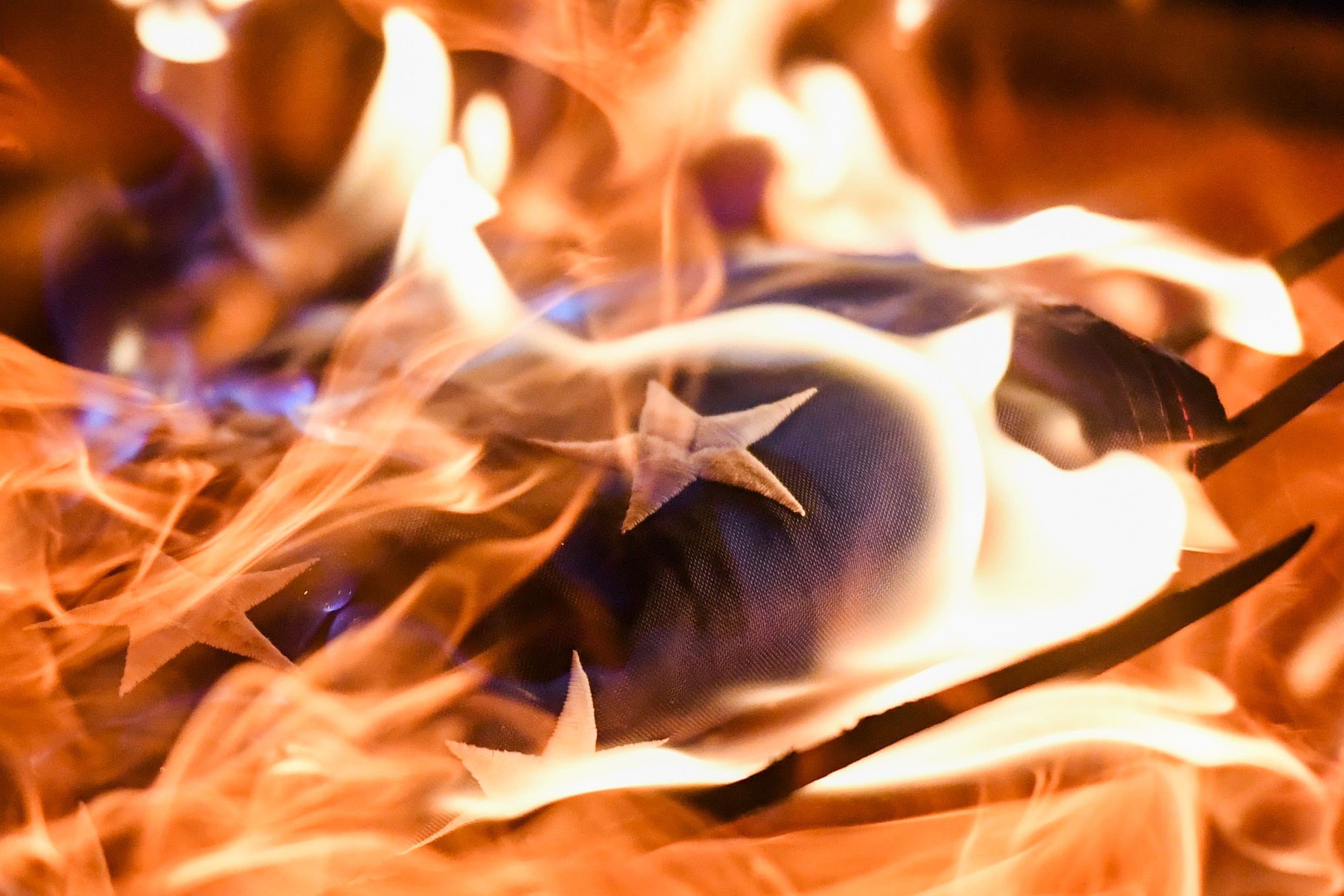
President Donald Trump signed an executive order on August 25 that aimed to penalize individuals who burn flags, particularly those associated with violence or inciting riots. However, this move has faced significant legal challenges, as courts have long upheld flag burning as a form of protected speech under the First Amendment. The executive order sparked a debate about the limits of free expression and the role of government in regulating symbolic acts.
Trump emphasized that burning a flag could lead to a year in jail, though the order itself does not specify a particular sentence. He claimed that the measure would immediately stop flag burning, suggesting it was a necessary step to restore respect for the American flag. This approach, however, raises questions about the balance between protecting national symbols and preserving individual freedoms.
The Supreme Court’s Stance on Flag Burning
In 1989, the Supreme Court ruled in a 5-4 decision that burning a flag is a form of political expression and thus protected under the First Amendment. This landmark case involved Gregory Lee Johnson, who burned a flag during a protest at the 1984 Republican National Convention in Dallas. Johnson was arrested and convicted under a Texas law that prohibited the desecration of the American flag if it was likely to provoke anger. His appeal argued that his actions were a form of symbolic speech, which the Supreme Court ultimately supported.
This ruling set a precedent that flag burning cannot be legally prohibited unless it directly incites imminent lawless action. While some states, including Michigan, have laws against flag desecration, these were effectively superseded by the Supreme Court’s decision. Despite this, the legal landscape remains complex, with ongoing discussions about how to enforce laws without infringing on free speech rights.
Michigan’s Laws on Flag Desecration
Michigan Compiled Laws, specifically Section 750.244-750.247 under Act 328 of 1931, outline regulations regarding the display and use of the U.S. and Michigan flags. The law prohibits placing any words, figures, or designs on the flag, as well as selling or manufacturing items with flags attached or painted on them for advertising purposes. It also makes it a misdemeanor to publicly mutilate, deface, or show contempt for the flag.
However, enforcement of these laws is rare, and exceptions exist for acts permitted by federal or state statutes, military regulations, or non-commercial uses. This highlights the tension between maintaining the dignity of national symbols and upholding constitutional protections.
Proper Disposal of an American Flag
The American Legion established guidelines for the proper disposal of unserviceable flags in 1937, emphasizing that burning is an acceptable method. According to the U.S. Department of Defense, the flag should be folded in its customary manner before being burned. A ceremony involving a salute and the Pledge of Allegiance or a moment of silence is recommended.
If individuals are unable to conduct a formal ceremony, they can take the flag to local government offices, police stations, or veterans’ organizations that often have flag disposal boxes. These practices ensure that the flag is treated with respect while adhering to established traditions.
Balancing Free Speech and National Symbols
The debate over flag burning reflects broader discussions about the limits of free expression in the United States. While the First Amendment protects symbolic speech, including flag burning, there are ongoing efforts to address concerns about disrespect for national symbols. Legal experts argue that while the government cannot outlaw flag burning outright, it can pursue charges if the act incites violence or lawless behavior.
Attorney General Pam Bondi suggested that Trump’s goal of prosecuting flag-burning could be achieved without violating the Supreme Court’s decision, highlighting the complexity of navigating constitutional protections. Meanwhile, advocates for free speech emphasize that the First Amendment cannot be easily amended through executive orders, reinforcing the importance of judicial oversight in protecting civil liberties.
As the conversation continues, the interplay between law, tradition, and individual rights remains central to understanding the significance of flag burning in American society.