One of the great cathedrals in youth travel sports is in Emerson, Georgia, at the LakePoint complex. Every weekend of the summer, thousands of families make the pilgrimage so that their player has the opportunity to compete against the best teams from around the country and on pristine fields.
I had the opportunity to check out these fields in person earlier this summer, and I was blown away.
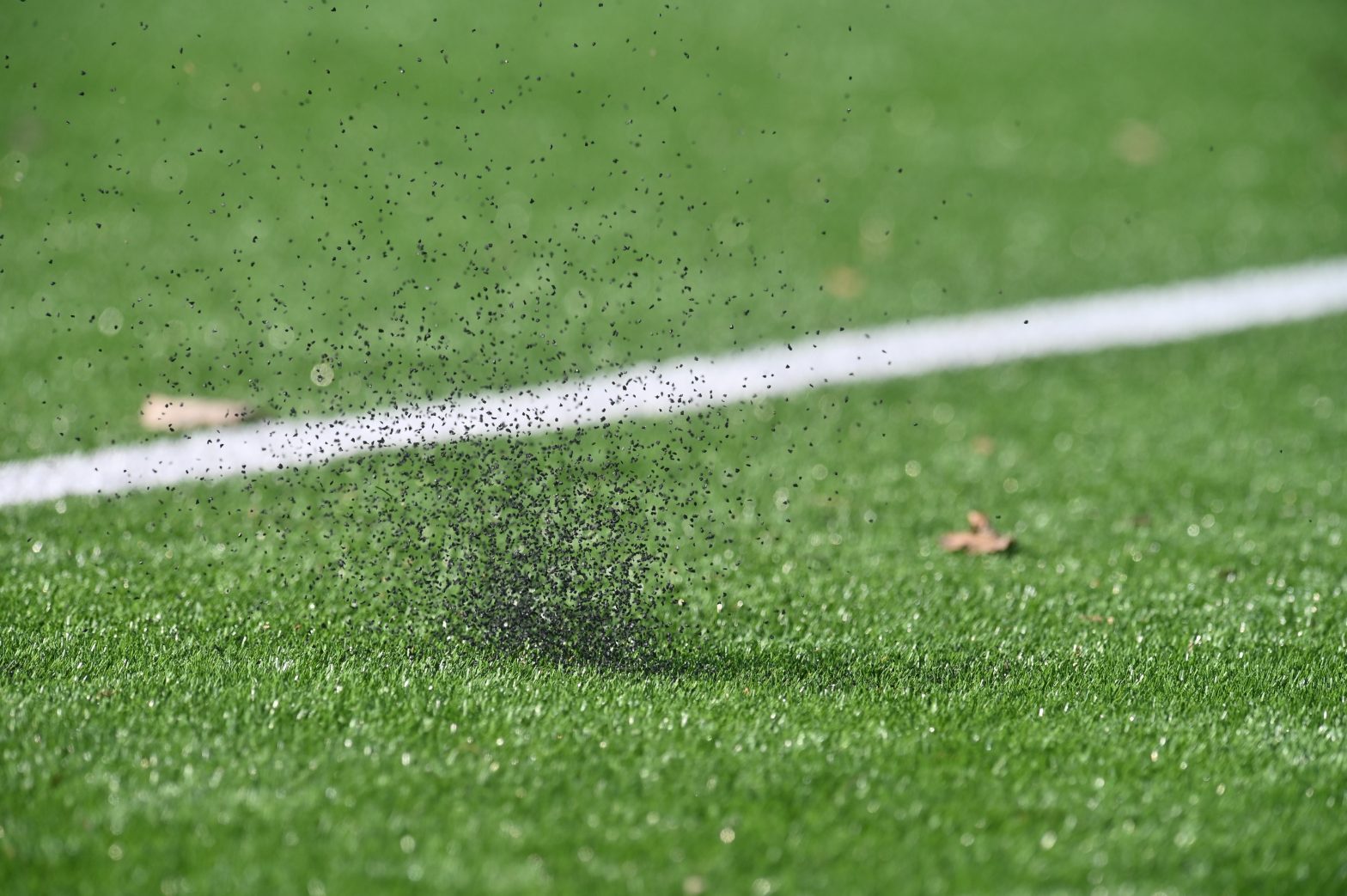
These fields are not grass – they use artificial turf with crumb rubber infill. Why? Most likely because turf fields like these provide more access when it rains, cost less for maintenance and are more resilient.
The truth is that LakePoint is not alone. Community after community is making the choice for turf fields for those very reasons. Even still, some ask questions about the safety of these fields.
At the heart of the issue is the sheer volume of games, practices and events that communities need to accommodate. Often there is competition for the scarce athletic resources.
With limited budgets, the challenge is keeping playing spaces available for all, even when games are back-to-back. Rising rates of inclement weather around the country exacerbate the problem. After all, if an overnight rainfall is enough to cancel the next day’s activities, tight schedules grow even tighter. And instead of getting our kids out there and exercising their bodies, they sit at home, moping, engrossed in their screens.
That’s why artificial turf has rapidly become a popular alternative to grass, often preferred by parents and players – as well as athletic directors and departments of parks and recreation – who prioritize availability and accessibility.
Turf has been shown to offer 10 times the usage compared with grass and remains available without the need for costly maintenance. Parents and players have seen the benefits: in Glastonbury, Connecticut, as the city questions its use of turf, a group of high school students circulated a petition in favor of its continued use.
However, opposition persists, mainly around the (long-debunked) idea that turf is somehow hazardous for users. It is this issue, in particular, that has led to contentious debates and concerns from community members. But in the public conversation, two recent major government studies have too often been missing.
Consider that The New York Times spoke to a Massachusetts researcher about crumb rubber and came away with this (emphasis ours):
“The missing link, she said, is that there have been few direct studies of how extensively children are being exposed to those chemicals, and how they may be harming health.”
But just in the past year, two major studies have emerged from highly accredited governmental bodies showing that exposure levels from crumb rubber infill pose minimal risk.
First, the Environmental Protection Agency, the Centers for Disease Control and Prevention, and the Consumer Product Safety Commission released a joint study last year on crumb rubber. They found that exposure is “likely limited” and, in fact, similar to grass. The joint study took years to complete and was explicitly aimed at addressing the idea that the material was problematic.
Similarly, the California EPA and the Office of Environmental Health Hazard Assessment released their own study in March of this year, examining players, coaches and others who use fields with crumb rubber. They examined multiple exposure pathways, including inhalation and direct skin contact, and their conclusion was definitive: they found “no significant health risks” and “low probability of and concern for developmental and reproductive health effects.”
These studies add to an extensive and growing body of research demonstrating that crumb rubber is a safe component of recreational infrastructure.
Local debates over turf and grass will surely continue. As more families join sports organizations, from recreation to travel, the need for consistent, playable surfaces is vital. These fields serve as community infrastructure for informal pickup games and events, too, making accessibility a key consideration to make sure people have a place to play and practice.
These debates should not exist in a vacuum, based on what we feel or think we know. Instead, they should be grounded in science – and in this case the science is clear.
LakePoint stands as just one shining example of what it means when a community has sustainable, high-quality playing surfaces. By making decisions with the latest science in mind, decision makers around the country can follow suit.
The opportunity for athletes of all ages to play year-round is at stake.
Scott Gerber is the program director of the Better Play Initiative. A resident of Arlington, Virginia, Gerber coaches little league and serves on the board of Arlington United Baseball. As a youth sports organizer and community advocate, he is passionate about empowering safe play and accessible recreation spaces. The Better Play Initiative can be found on X.
The post We Need Science Over Scare Tactics on Artificial Turf appeared first on The Well News | Pragmatic, Governance, Fiscally Responsible, News & Analysis.