Prediction markets offer an intriguing method to tap into expert insights, bringing attention to knowledge that might otherwise stay hidden. These platforms provide experts with a financial motivation to share their information, or even allow non-experts to place bets on particular results, like an election outcome or the price of a stock index orcryptocurrencyHowever, they are not without disadvantages, as prediction markets can frequently resemble gambling and may be vulnerable to various forms of market manipulation.
Here’s what’s driving the rapid rise in popularity of prediction markets and why investors should exercise caution.
What is the mechanism behind prediction markets?
A variety of prediction markets have emerged in recent years, as speculative funds, genuine specialists, and bettors compete to participate in the most active areas. Prediction markets employ what are referred to as event contracts to establish a trading platform for real-world occurrences, including elections, sports competitions, and the value of stock indices and digital currencies at particular moments, along with numerous other possibilities. Thousands of contracts can be active simultaneously, providing ample excitement for dedicated gamblers.
Event contracts are designed as binary wagers — one party is correct and receives the payment, while the other is incorrect and incurs a loss. Therefore, event contracts must be formulated in a manner that leaves no room for ambiguity. Event contracts are a type ofbinary option, where only one party is correct. At the conclusion of the event, the bet contract is resolved among the involved parties.
For instance, a prediction market could include a statement like the following:
Will the cost of Bitcoin exceed $110,000 on August 25 at 12:00 PM Eastern Time?
- Buy Yes: 14 cents
- Buy No: 89 cents
If you believe the price of Bitcoin will exceed this level by the specified time, you can purchase a “yes” share for 14 cents, with no limit on the number of shares you can buy. If you think Bitcoin will not reach the target price, you can buy a “no” share for 89 cents. In either scenario, if your prediction is accurate, you will receive a payout of $1.
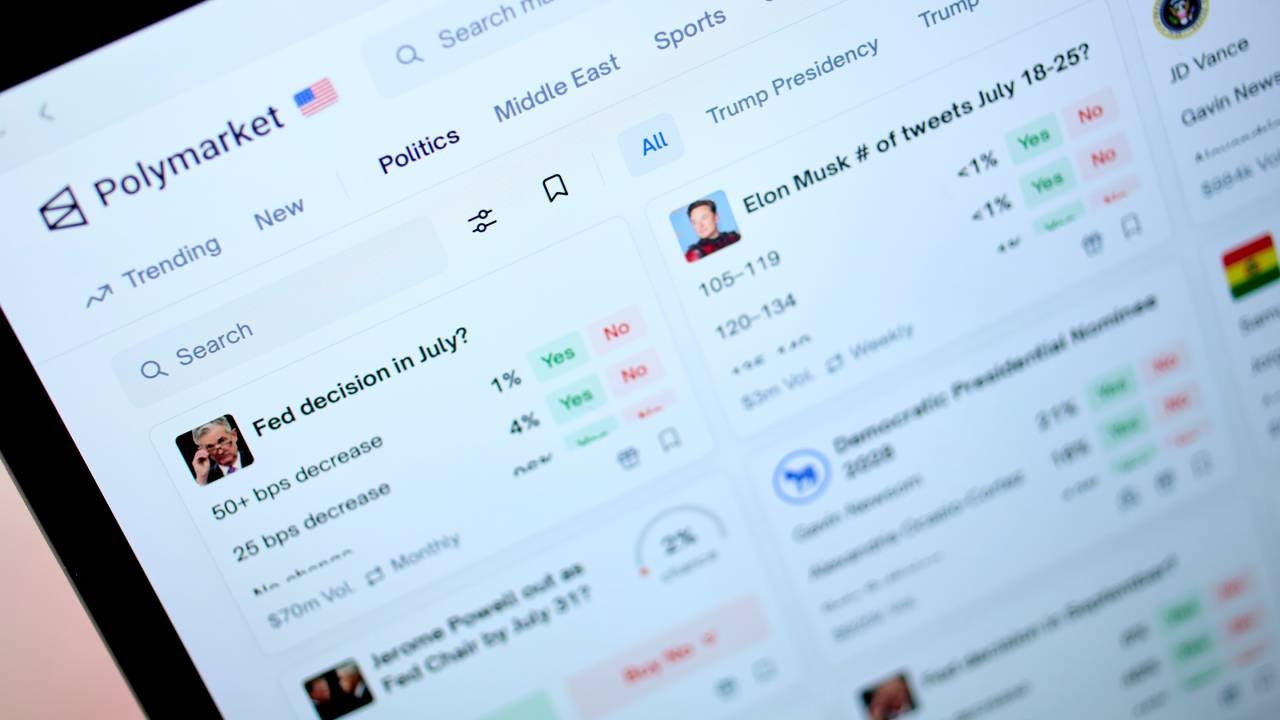
Several prominent players in the prediction market are Polymarket, PredictIt, and Kalshi. These platforms enable betting on various topics such as politics, sports, global affairs, and culture. For instance, you can place a bet on the number of tweets Elon Musk will post in a specific week.
Brokers such as Robinhood and Interactive Brokersalso provide event agreements, although the variety of events tends to be more specialized, such as centered around economic and financial gatherings or athletic competitions.
Why are prediction markets useful?
Prediction markets can be particularly intriguing as tools for forecasting and, when functioning optimally, they can deliver genuine societal benefits by highlighting the probable results of various events. Prediction markets encourage experts to share their well-informed perspectives on potential outcomes, which then becomes accessible to the public. For instance, individuals who have a deep grasp of an election result or a global political development can place bets, conveying their views via a prediction market. This information becomes available, enhancing the overall comprehension of the event.
Certainly, numerous event contracts contain nearly meaningless details. For instance, recent widely followed contracts featured questions like, “Will MrBeast raise $40M for clean water by August 31?” and “Is the Earth flat?” And naturally, there’s always wagering on how active Elon Musk’s Twitter activity is.
What are the advantages and disadvantages of prediction markets?
Prediction markets pose several risks for investors, not only related to the specific event being traded but also inherent in the market structure.
Advantages of prediction markets
- Publicize otherwise private information:Prediction markets can reveal concealed or specialized knowledge, offering useful insights to a broader group of people.
- Opportunity to increase your funds:Event contracts can generate significant profits, particularly when you possess non-mainstream insights that prove to be accurate. The more unconventional your correct information or viewpoint, the greater its potential value.
- Bite-sized shares:Event contracts might let you purchase shares for amounts ranging from 1 cent to 99 cents, allowing you to acquire as many contracts as desired without the price of one contract being a barrier.
- New “hedgeable” risks:By bringing forward fresh data and providing agreements, speculative markets can develop methods for participants toprotect yourself from those risks in different marketsFor instance, if you were worried that a political event could influence the cost of oil, which impacts some of your other investments, you could potentially utilize event contracts to mitigate this risk.
Disadvantages of prediction markets
- Similarities to gambling:Many event-based contracts are essentially gambling in a different form, similar to binary options. Indeed, sports events are a common focus for prediction markets. However, other financial instruments also resemble this, such as whether a stock or index will hit a certain level by the end of the day. These types of contracts appear very similar tozero-day options— featuring immediate, either-or rewards and losses without requiring any expertise. Thus, there’s essentially no investment involved — it’s merely a short-term bet on an event.
- Wagers on “unknowable” things:Many event agreements don’t demand specialized knowledge and are essentially speculative wagers on results that are largely insignificant — the count of Elon Musk’s weekly tweets serves as a prime example. Those taking part cannot realistically know this kind of data — it’s purely a guess.
- Markets are not efficient and are being manipulated by automated systems:Studies indicate that prediction markets are not particularly efficient and are being manipulated by bots that capitalize on market inefficiencies. According to research conducted by IMDEA Markets, analyzing 86 million bets between April 2024 and April 2025, bots might take advantage of pricing errors across various markets through arbitrage to secure risk-free gains. Although the probabilities for yes and no outcomes should always add up to 100 percent, this is not always the case (as shown in the real-world example above), allowing ultra-fast bots to execute trades and profit from risk-free arbitrage.
- Outlawed in many countries: Due to its resemblance to gambling, prediction markets could be prohibited in various regions. For instance, Polymarket is banned in several countries, such as France, Switzerland, Singapore, and Thailand. It has been inaccessible in the United States since 2022, but its recent acquisition of a derivatives exchange might enable it to re-enter the U.S. However, the prediction market Kalshi operates legally in every U.S. state.
- May use stablecoins:Prediction platforms like Kalshi and Polymarket utilize the USDC stablecoin.Stablecoinsfunctions similarly to the U.S. dollar but carries greater and potentially more severe risks that are not resolved by therecently passed GENIUS Act.
Bottom line
From the perspective of investors, prediction markets appear more like betting than traditional investing. Although certain event-based contracts can offer useful insights, many are just frivolous bets on insignificant details. Therefore, those considering “investing” in prediction markets should thoughtfully evaluate the advantages they gain in comparison to investing in successful, profitable companies.